Concrete Engineering Solutions

A Detailed Guide to the Concrete Injection Process

Category: concrete crack injection

A Detailed Guide to the Concrete Injection Process

If you have started noticing cracks on your walls, ceilings, or water leaking through your basement, do not panic; many Sydney property owners face the same issue. See, concrete may look strong, but over time it gets cracked due to constant heat, rain, natural movement, and natural aging. 

You might be thinking, “Now, what should you do? Do you need to replace large sections or rebuild?” The answer is, no, you do not need a complete replacement! You can fix these cracks easily with concrete injection in Sydney services. This process is used for repairing your concrete. 

In this guide, we will understand what concrete injection is, its benefits, and how experts fix your repair. 

What Is Concrete Injection? 

Basically, concrete injection is a very simple repair method; it uses some materials, such as epoxy or polyurethane, to fill cracks or gaps. These materials make concrete strong again. It’s like giving your concrete a strong glue treatment that restores its strength and waterproofing. 

Why Are Concrete Injections Important? 

Over time, these cracks can cause the steel inside the concrete to rust, which weakens your property’s structure. And that’s why concrete injections are important; they help you make the concrete strong again. It prevents all types of cracks from getting bigger. It saves money and time by repairing instead of replacing, and you get a sense of safety. 

Types of Concrete Injection Materials

  1. Epoxy: Engineers use this material when they need to repair cracks. It is a strong, glue-like chemical used to make concrete strong.
  2. Polyurethane: This flexible material can seal cracks, especially water leaks. It’s a good option for basements and wet areas.
  3. Cementitious grouts: It is a mixture of cement and water, which can be used for larger cracks.
  4. Acrylic gels: This is a thin, flexible gel, and it’s super good for small cracks and waterproofing small areas.

Always take an expert’s help; they will choose the material based on your structure’s needs. 

The Simple Step-by-Step Process Of Concrete Injection 

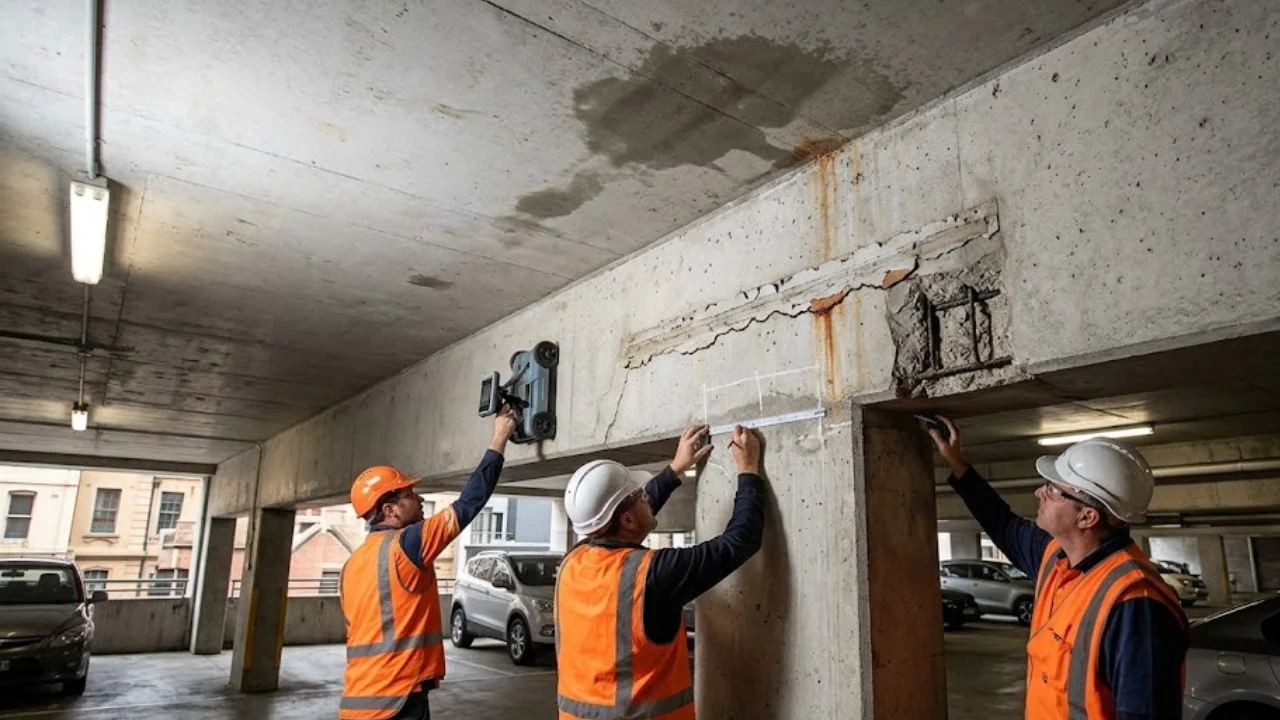
  1. Inspection and Cleaning: First, experts check the area to find the exact cause, size and depth of cracks. Then, they clean the surface using a wire brush. These clean surfaces help the material stick properly. You just can’t do this on your own; for that, you need expert people.
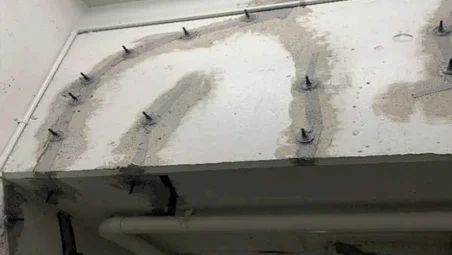
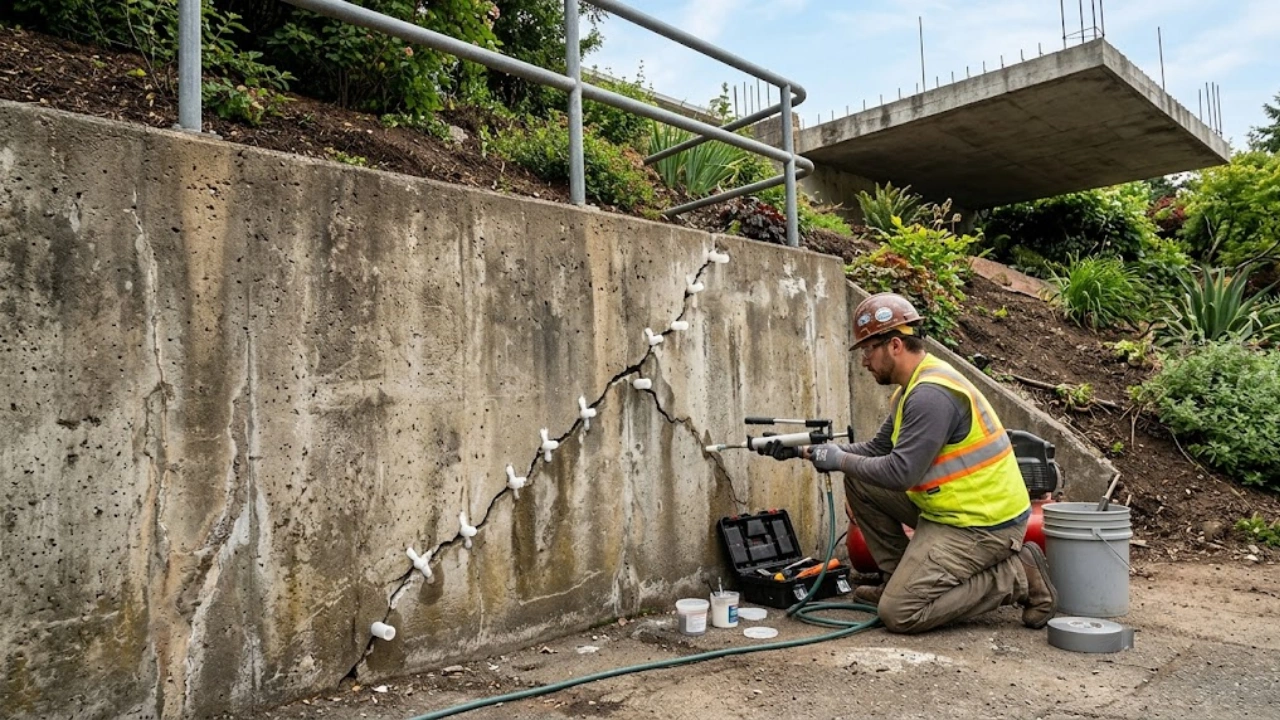
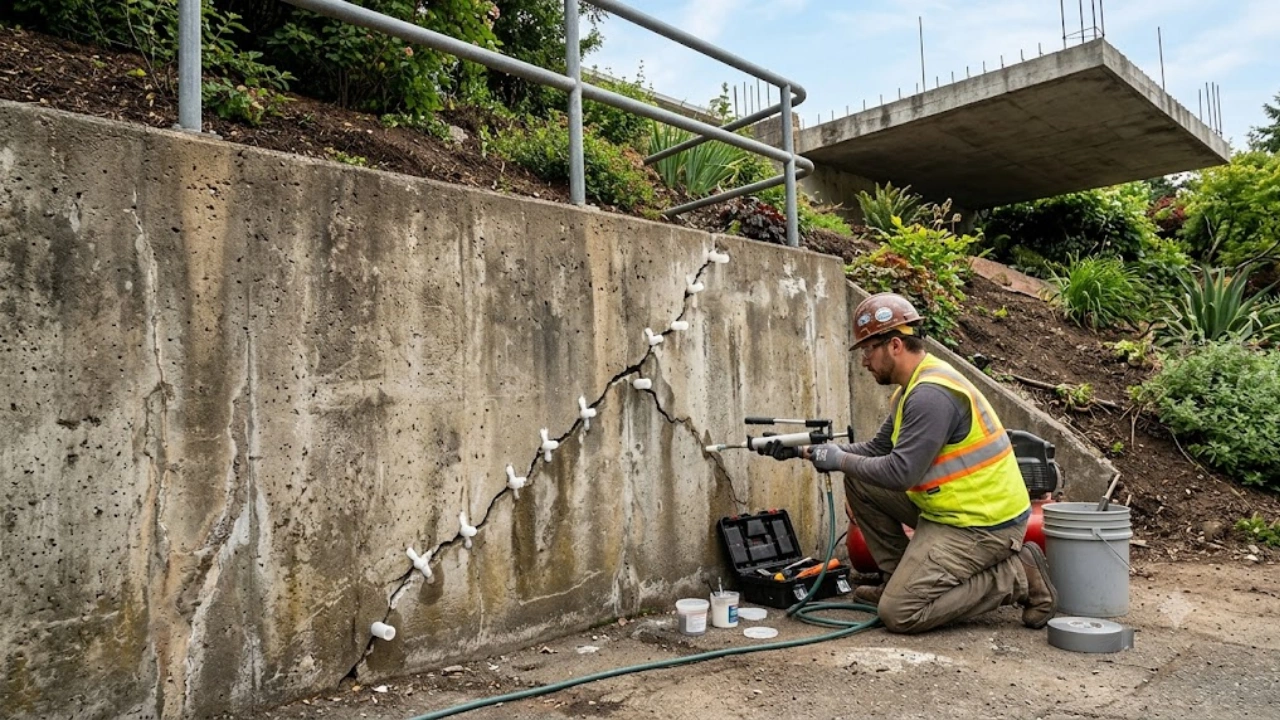
  2. Install Injection Ports: Small entry points called ports are attached along the crack. By doing this, engineers can fill the repair material deep in the concrete. They seal the surface with epoxy paste to avoid material leakage during injection.
  3. Choose the Right Material: Structural engineers select materials according to crack type.
  4. Then Add the Material: The experts prepare the material and add it through the ports by using low or high pressure.
  5. Cure and Last Finishing: Once the injection is done, the engineers leave the material to cure and harden. Once cured, engineers remove the ports and excess sealants, and after that, they clean and repaint the surface to match the rest of the structure.
  6. Final Check: And finally, engineers inspect the repaired area to confirm if there are any leaks and also check the structure’s strength. This last stage confirms the success of the repair.

This method is efficient, cost-effective, and quick, which is why concrete injection in Sydney services are the first choice of many property owners. 

When Should Property Owners Need Concrete Injection? 

If you notice these changes, 

  • Cracks in walls, slabs, or ceilings.
  • Water leakage from walls, floors, or basements or damp spots on concrete.
  • Rust stains on the surface.
  • Uneven floors or sagging areas.
  • Repaired cracks reopening.

These are early warning signs. If you fix this problem early, then it will save you a lot of time, money, and stress. 

Benefits of Concrete Injections 

  • It’s a more affordable crack repair method than replacing entire sections of concrete.
  • It prevents cracks from worsening and protects your property.
  • It stops water leaks and moisture penetration.
  • Restores the strength and longevity.
  • It is a quick process.

These benefits make concrete injection an easy option for repairing concrete damage. 

Need Professional Help? 

If your property has cracks, leaks, or any signs of concrete damage, now is the time to take action. Do a quick check-up from experts; this will save you from costly repairs later. 

If you are looking for experienced concrete repair services, then contact Concrete Engineering Solutions. You will get a professional inspection and the best repair service. Call us today to book your property inspection appointment.

How to Prevent Concrete from Cracking: Pro Tips That Actually Work

Category: concrete crack injection

concrete from cracking

Have you recently poured concrete for a driveway, slab, or backyard project? Concerned it may crack over time? You’re not alone – concrete cracking is one of the most common challenges faced by homeowners, builders, and strata managers.

Concrete cracking typically occurs due to inadequate preparation, improper curing, excess water in the mix, or differential movement in the subgrade. The good news is that with proper engineering practices and planning, many of these issues are preventable.

Why Does Concrete Crack?

Understanding the causes of cracking is the first step toward preventing them.

  • Plastic Shrinkage: Rapid moisture loss during curing can cause shrinkage cracks.
  • Thermal Movement: Expansion and contraction from temperature fluctuations induce stress.
  • High Water–Cement Ratio: Excess water weakens concrete strength, increasing crack risk.
  • Inadequate Subgrade Preparation: Unstable or poorly compacted bases contribute to settlement cracks.
  • Lack of Control Joints: Properly spaced joints are essential to relieve tensile stresses and prevent random cracking.

How to Prevent Concrete Cracking

Prevention starts before the concrete is poured:

  • Specify a properly designed mix with correct water–cement ratio and admixtures where required.
  • Thoroughly compact and stabilise the subgrade and provide adequate drainage.
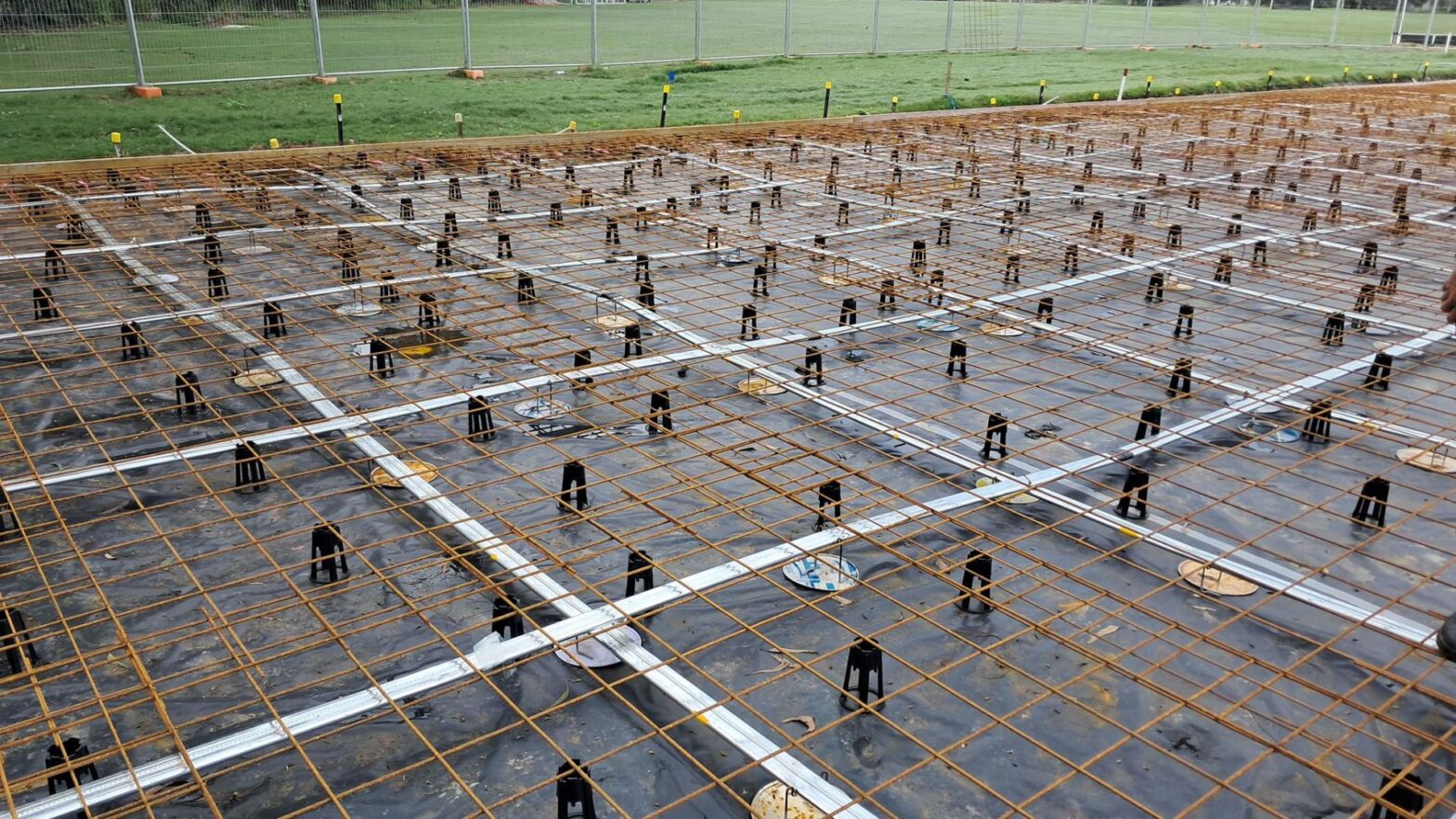
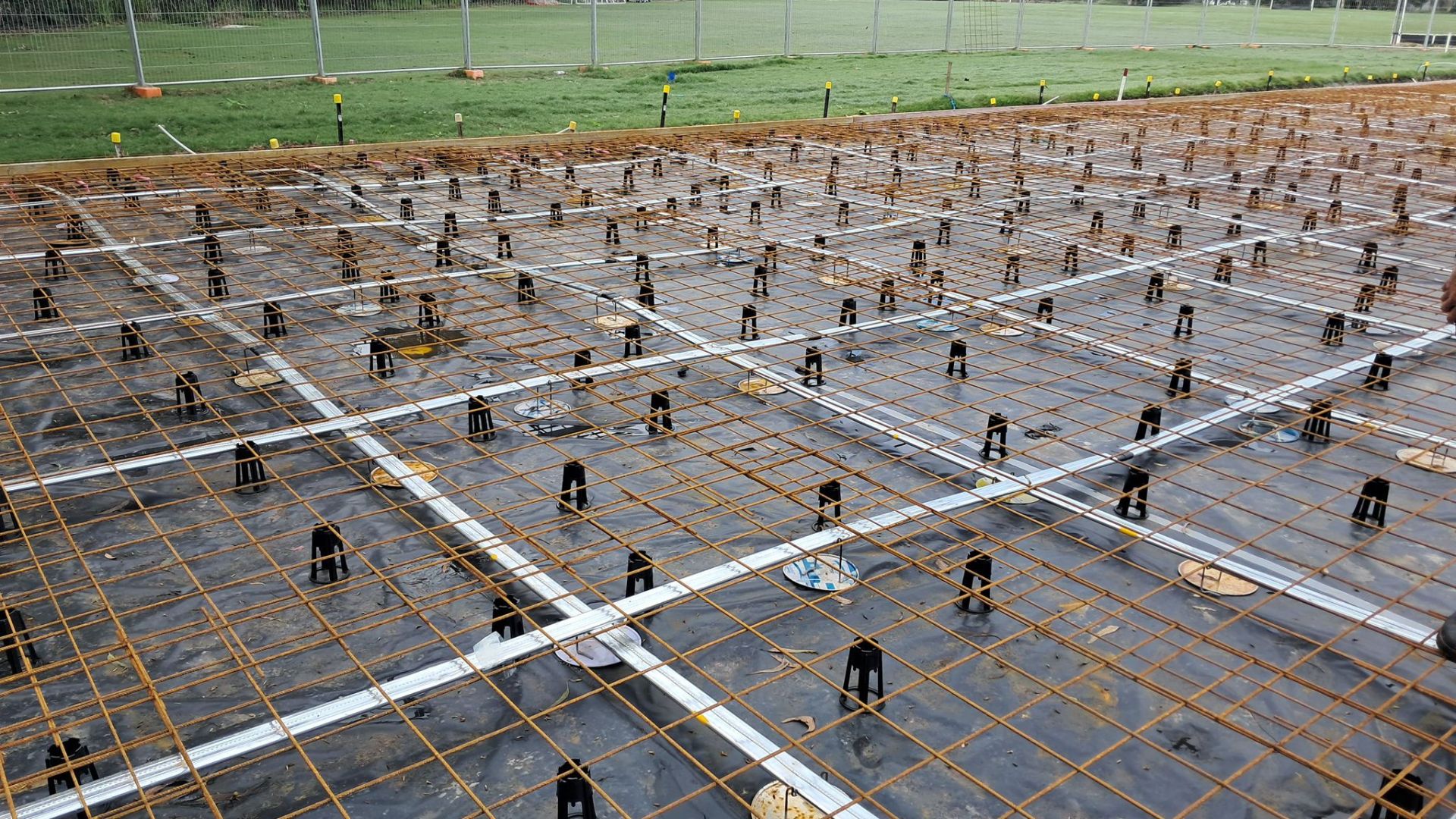
  • Install control joints at recommended spacings and depths to control shrinkage stresses.
  • Apply proper curing methods (e.g., water curing, curing compounds, or coverings) for at least 7 days to minimise rapid moisture loss.

Even with the best preparation, minor cracks can occur. The key is knowing which ones matter.

Types of Cracks You Should Know

  • Hairline Cracks (<2 mm): Typically surface-level and aesthetic, with minimal structural impact.
  • Structural Cracks (>5 mm): Wider cracks may indicate subgrade movement, excessive loading, or reinforcement issues.
  • Edge or Corner Cracks: Often caused by differential settlement or inadequate reinforcement at re-entrant corners.
  • Moisture-Ingress Cracks: Cracks with water penetration or differential movement may signal durability or structural concerns.

Can You Fix Cracks Yourself?

Yes to an extent, minor non-structural cracks can often be addressed with basic repairs:

  • Clean and prepare the crack by removing debris and laitance.
  • Apply an epoxy injection, polyurethane filler, or cementitious patch material depending on the crack type.
  • Finish with a protective sealant to reduce future moisture ingress.

However, an expert opinion is always recommended.

For larger, deeper, or recurring cracks, engage a qualified structural or remedial engineer. The underlying issue may involve soil movement, reinforcement corrosion, or structural distress, which require professional diagnosis and remediation.

Conclusion: Be Proactive

Concrete cracking is common but can often be minimised with proper engineering practices—sound base preparation, the right mix design, adequate curing, and timely maintenance. Being proactive helps safeguard the durability and performance of your concrete structures.

Need expert help?

Need expert advice? Contact Concrete Engineering Solutions, Sydney’s trusted specialists in concrete inspection and remedial repair. Whether addressing minor surface cracking or diagnosing complex structural issues, our engineers provide reliable, long-term solutions.

Why Concrete Cracks Keep Coming Back After Repair?

Category: concrete crack injection

Concrete crack injection in Sydney

A concrete crack is repaired. The surface is cleaned, the damaged area is filled, the finish looks neat and the building goes back into normal operation.

Then, months later, the same crack appears again.

For property owners, facility managers, strata committees and contractors, this can be one of the most frustrating concrete problems to deal with. The immediate reaction is often to repair the visible damage again. But a recurring crack is usually telling you something important: the movement, moisture, corrosion or structural condition that caused the original crack may still be present.

This is becoming increasingly relevant across Australia as owners place greater attention on maintaining existing buildings and extending the service life of concrete structures. Infrastructure Australia has reported that ageing assets and reactive maintenance are placing pressure on asset lifespans, costs and resilience, with greater emphasis now being placed on maintenance and renewal of existing infrastructure.

For Sydney property owners, the real question is not simply, “How do we fill this crack?”

It is:

“Why did the crack come back?”

A Repaired Crack That Returns is Giving You Useful Information

When a crack reappears in almost the same location, the repair itself may not be the main problem.

Concrete moves. Structures respond to temperature, loading, moisture, settlement and changes in their surrounding environment. If that movement continues after the repair, the repaired area can become stressed again.

The same thing can happen when water continues to enter through a wall, slab or construction joint. A repair may close the visible opening, but persistent moisture can continue affecting the surrounding concrete and reinforcement.

That is why recurring cracking deserves investigation rather than repeated patching.

What a recurring crack may be telling you

What you notice

Possible reason

Crack returns in exactly the same location

Ongoing movement or unresolved structural issue

Crack becomes wider

Continued movement or loading

Crack appears after rain

Water ingress or drainage issue

Rust staining appears nearby

Possible reinforcement corrosion

Concrete begins breaking away

Deterioration beneath the surface

Crack appears around a joint

Joint movement or deterioration

Several cracks appear together

Broader structural or environmental issue

Crack appears around a previous repair

Incompatible or inadequate repair strategy

These signs do not provide a diagnosis on their own. They indicate that the repair needs to be considered alongside the condition of the surrounding structure.

The Most Common Mistake is Treating the Crack as the Problem

Think about a leaking roof.

Painting over the water stain might make the ceiling look better for a short time, but the leak has not disappeared. The same principle can apply to concrete.

A crack can be the visible result of another problem occurring within or around the structure. If that underlying condition remains active, the crack may return even after a technically neat repair.

For example, a crack in a basement wall may be associated with ongoing water pressure. A crack in a suspended slab may relate to structural movement or reinforcement deterioration. A crack in a ground supported floor may be associated with settlement or changes in the supporting ground.

The repair method therefore needs to match the reason the crack exists.

Five Reasons Concrete Cracks Can Return

There is no single cause behind recurring concrete cracking. In practice, several conditions can produce similar looking damage.

1. The Structure Is Still Moving

Some cracks are associated with movement that has not stopped.

Thermal changes, structural loading, settlement and other forms of movement can cause a repaired crack to reopen. If the repair material cannot accommodate the movement or the crack is repaired without addressing the source, the problem may return.

This is why an engineer may need to determine whether a crack is stable or active before recommending a repair method.

2. Water is Still Getting in

Water is one of the biggest enemies of long term concrete durability.

A crack can provide a pathway for moisture to reach deeper areas of a structure. In reinforced concrete, persistent moisture can contribute to reinforcement corrosion. As reinforcement corrodes, it can expand and place pressure on the surrounding concrete, eventually causing cracking and spalling.

A repair that closes the visible crack without addressing the water source may therefore have limited long term success.

This is particularly relevant to basements, retaining walls, car parks, balconies and other structures exposed to persistent moisture.

3. Reinforcement Corrosion is Continuing

A crack can sometimes be the beginning of a much larger deterioration process.

When reinforcement inside concrete starts corroding, the corrosion products occupy more volume than the original steel. The resulting pressure can cause cracking and eventually concrete delamination or spalling.

If the damaged concrete is repaired but the reinforcement remains in a deteriorated condition, the same area can deteriorate again.

A useful warning combination

Cracking + rust staining + dampness + concrete breaking away

When these signs occur together, the problem deserves more than a cosmetic repair.

4. The Wrong Repair Method Was Selected

Not every crack should be repaired in exactly the same way.

A stable structural crack can require a very different approach from a crack that continues to move. A dry crack may also require a different treatment from one affected by active water penetration.

This is where repair selection becomes important.

Repair approach depends on the crack condition

Crack condition

Important consideration

Stable structural crack

Suitable injection or repair system may be considered

Moving crack

Movement needs to be assessed before repair

Water bearing crack

Water source and ingress need attention

Corrosion related crack

Reinforcement condition should be assessed

Surface shrinkage crack

Structural injection may not be appropriate

Crack with concrete loss

Damaged concrete may require removal and reinstatement

This is one reason concrete repair Sydney projects should begin with an assessment of the damage rather than immediately selecting a product.

The right material applied to the wrong problem can still produce a poor result.

5. The Structure Has Been Asked to Do More Than Before

Buildings change.

A warehouse may receive heavier equipment. A commercial property may undergo refurbishment. A car park may experience different traffic patterns. Plant rooms may receive new machinery. A building may even undergo a change of use.

Those changes can alter the loads carried by existing concrete elements.

If cracking begins after a significant change in loading, it is worth considering the structural context rather than treating the crack as an isolated surface issue.

This is particularly important for older buildings where the original drawings may not fully represent later modifications.

What About Crack Injection?

Crack injection can be an effective repair technique for suitable concrete cracks, but it is not a universal answer.

The first step is to determine what type of crack is present and what condition exists around it.

Injection may be considered where the crack characteristics, structural requirements and surrounding concrete make the technique appropriate.

For example, epoxy based systems can be used for certain stable cracks where bonding and structural restoration are required. Other materials may be more appropriate where water ingress or movement is involved.

That distinction matters.

Concrete crack injection in Sydney should not be treated as a single product based solution. The crack, concrete condition, moisture, movement and structural requirements all need to be considered.

When Epoxy Injection Makes Sense

Epoxy injection is commonly associated with repairing suitable cracks in structural concrete.

Its effectiveness depends heavily on the condition of the crack and the surrounding concrete. If the crack continues to move significantly, simply filling it with a rigid material may not address the underlying issue.

Before epoxy crack injection work begins, the crack should therefore be assessed for factors such as:

  • Width and depth
  • Crack location
  • Structural significance
  • Moisture condition
  • Evidence of movement
  • Surrounding concrete quality
  • Reinforcement condition
  • Previous repair work

The purpose is not to make the crack disappear visually. The purpose is to select a repair strategy that is appropriate for the actual condition of the structure.

The Repair History Can Reveal What Went Wrong

One of the most overlooked sources of information is the building’s own repair history.

If a crack has already been repaired twice and has returned twice, the previous work should be reviewed before another repair begins.

Was the crack active?

Was there water entering the structure?

Was reinforcement corrosion present?

Was the surrounding concrete deteriorated?

Was the repair material suitable?

Was the crack prepared correctly?

Was the repair actually designed for the condition?

A recurring problem can sometimes provide more information than a newly discovered crack because there is already a history to examine.

A Practical Investigation Can Change the Repair Decision

A good investigation does not need to mean opening up the entire structure.

The approach can begin with a visual inspection and a review of available drawings, previous repair records and site conditions. From there, additional testing can be selected based on the findings.

For larger or more complex structures, engineers may consider concrete scanning, GPR, thickness testing, material assessment or other investigation methods.

This is particularly useful when the crack occurs in an area where reinforcement, post tension elements, services or other concealed features may be present.

Concrete injection work should therefore sit within a broader repair strategy where the condition of the structure has been properly assessed.

A Recurring Crack in a Strata Building is Not Just a Cosmetic Issue

This subject is particularly relevant to Sydney strata properties.

The NSW Government states that owners corporations are responsible for maintaining and repairing common property, including concrete slabs, garages, balconies and boundary walls.

The issue is significant enough that NSW Government agencies continue to monitor serious building defects across strata communities.

The 2025 NSW strata defects research found that 53 per cent of buildings surveyed had serious defects, the same proportion recorded in the 2023 research. The proportion of buildings with serious defects reported to the regulator increased to 36 per cent, compared with 34 per cent in 2023 and 15 per cent in 2021.

These figures do not mean every concrete crack represents a serious building defect. They do show why building maintenance and timely investigation deserve proper attention.

NSW Government guidance also warns that delaying repairs can increase costs and risks.

Car Parks are a Good Example of Why Cracks Return

Concrete car parks experience a particularly tough combination of conditions.

Vehicles create repeated loading. Rainwater can enter through exposed areas. Water can carry contaminants onto concrete surfaces. Poor drainage can leave sections damp for extended periods.

Over time, these conditions can contribute to deterioration.

A crack in a suspended car park slab may therefore require a different assessment from a small crack in an internal residential floor.

The location of the crack matters. So does its relationship to beams, columns, joints, reinforcement and drainage.

PRO TIP

If a crack in a car park keeps returning, photograph it at regular intervals and record its location. Changes in width, length, surrounding staining or concrete loss can provide useful information for the engineer assessing the problem.

Why Repeated Repairs Can Become More Expensive

Repeatedly repairing the same crack can create a false sense of progress.

The surface looks better, but the underlying condition remains.

A property owner may then pay for several rounds of patching, injection or surface treatment before eventually commissioning an investigation that identifies the real cause.

A better approach is to consider the likely cause when the crack first demonstrates a pattern of recurrence.

Approach

Short term result

Long term risk

Repeated surface patching

Better appearance

Crack may return

Repair without moisture control

Crack may close temporarily

Water related deterioration may continue

Injection without assessing movement

Local repair

Crack may reopen

Repair without checking reinforcement

Damage removed visually

Corrosion may continue

Investigation followed by repair

More informed intervention

Better chance of addressing the underlying issue

The cheapest repair on paper is not always the lowest cost solution over the life of the building.

When a Crack Deserves Immediate Attention

Not every crack requires emergency action. Fine surface cracking can occur for relatively minor reasons.

The situation changes when cracking is accompanied by other warning signs.

Look more closely when you notice:

  • Rapidly increasing crack width
  • Rust staining
  • Concrete breaking away
  • Water entering through the crack
  • Significant changes in floor or wall levels
  • Cracking around structural supports
  • Multiple cracks appearing in the same area
  • Cracks returning soon after repair
  • Visible reinforcement
  • Cracking following major building modifications

The combination of symptoms is often more useful than any single sign.

THINGS TO REMEMBER

A recurring crack is information. It tells you that something may still be happening within the structure.

Repair material is only one part of the solution. Crack behaviour, moisture, reinforcement and structural movement can all influence the result.

Water should never be ignored. Persistent moisture can contribute to deterioration and reinforcement corrosion.

Old repair records matter. Previous failures can help identify what needs to change in the next repair.

Not every crack requires injection. The repair method should reflect the actual condition.

Older buildings deserve closer assessment. Existing structures may have undergone modifications that are not fully captured in current documentation.

Early investigation can prevent repeated repair costs. Finding the cause before carrying out another repair can produce a more sensible long term maintenance strategy.

Fixing the Crack Should Be the Start, Not the End

A concrete crack that returns after repair is not necessarily evidence that concrete repair does not work. More often, it means the original repair did not fully address the conditions affecting the crack.

The solution may involve crack injection. It may involve concrete repair, reinforcement treatment, waterproofing, drainage improvements or structural strengthening. In some cases, several measures may be required together.

The important part is establishing why the crack exists and what is causing it to remain active.

For Australian property owners, this approach is becoming increasingly important as ageing buildings and infrastructure require better maintenance and longer service lives. Infrastructure Australia has highlighted the need for stronger maintenance and renewal practices across existing assets rather than relying predominantly on new infrastructure investment.

Stop Repairing the Same Crack Twice

At Concrete Engineering Solutions, we help property owners, builders, contractors, strata teams and project managers investigate recurring concrete damage and identify practical repair strategies. Our work can include concrete crack assessment, concrete injection, structural concrete repair and investigation of the conditions contributing to recurring deterioration.

If a crack has already been repaired and has returned, that is the point to stop treating it as an isolated surface defect.

Find out what is making the crack return, then repair the concrete with the cause in mind.

Why Concrete Crack Injection Sydney is Recommended for Retaining Walls and Suspended Slabs?

concrete crack injection in Sydney

Category: concrete crack injection

concrete crack injection in Sydney

Cracks in concrete are a common concern for property owners, builders, strata managers, and facility managers across Sydney. While some cracks may appear minor at first, they can often indicate underlying issues that require attention. If left untreated, cracks can allow water ingress, accelerate concrete deterioration, and reduce the lifespan of critical structural elements.

Two areas where crack repairs are particularly important are retaining walls and suspended slabs. These structures are constantly exposed to loads, environmental conditions, and movement that can contribute to cracking over time.

This is why many engineers and remediation specialists recommend concrete crack injection in Sydney as an effective solution for restoring structural integrity and preventing further damage.

Why Cracks Develop in Retaining Walls and Suspended Slabs

Concrete is a durable construction material, but it is not immune to movement and environmental stress.

Retaining walls and suspended slabs face unique challenges throughout their service life.

Retaining walls must resist soil pressure, moisture buildup, and ground movement. Suspended slabs are designed to carry loads while spanning open spaces, making them susceptible to movement, vibration, and long term wear.

Common causes of cracking include:

  • Ground settlement
  • Water pressure behind retaining walls
  • Concrete shrinkage
  • Structural movement
  • Thermal expansion and contraction
  • Excessive loading
  • Age related deterioration

While not every crack is structurally significant, professional assessment is essential to determine the cause and appropriate repair method.

Why Cracks Should Never Be Ignored?

One of the biggest mistakes property owners make is assuming a crack is purely cosmetic.

Even small cracks can create pathways for water and contaminants to enter the concrete.

Once moisture reaches internal reinforcement, the risk of corrosion increases. Over time, this can lead to:

Potential Issue

Impact on Structure

Water ingress

Internal deterioration

Reinforcement corrosion

Reduced structural capacity

Concrete spalling

Safety concerns

Mould growth

Property damage

Increased repair costs

Long term financial impact

Addressing cracks early is almost always more cost effective than dealing with advanced deterioration later.

What Is Concrete Crack Injection?

Concrete crack injection is a specialised repair technique used to seal and restore cracked concrete elements.

The process involves injecting specialised materials into the crack under controlled pressure. These materials penetrate deep into the crack and bond with the surrounding concrete.

Depending on the nature of the crack, engineers may specify:

  • Epoxy injection
  • Polyurethane injection

Each material serves a different purpose based on structural requirements and moisture conditions.

Epoxy systems are commonly used where structural bonding is required, while polyurethane systems are often used to stop active water ingress.

Why Retaining Walls Benefit from Crack Injection

Retaining walls are particularly vulnerable to moisture related issues.

As soil retains water behind the wall, hydrostatic pressure builds over time. This pressure can force water through even very small cracks.

Once water begins penetrating the wall, several problems can develop.

Increased Moisture Exposure

Water entering through cracks can accelerate deterioration within the concrete.

Reinforcement Corrosion

Moisture reaching embedded steel reinforcement increases the likelihood of corrosion.

Structural Weakening

Over time, ongoing water ingress can compromise the wall’s ability to perform as intended.

Property Damage

Leaking retaining walls can affect surrounding landscaping, pavements, and adjacent structures.

Crack injection helps seal these pathways and prevent further moisture penetration.

Why Suspended Slabs Require Prompt Crack Repairs

Suspended slabs are common throughout Sydney’s residential, commercial, and industrial buildings.

These structural elements support significant loads and often contain reinforcement or post tension systems.

Cracks in suspended slabs should always be assessed carefully.

Potential concerns include:

  • Water penetration
  • Reduced durability
  • Corrosion of reinforcement
  • Damage to finishes below
  • Increased maintenance requirements

Prompt repairs help maintain the long term performance of the slab and reduce future remediation costs.

The Role of Water in Concrete Deterioration

Water is often one of the biggest contributors to concrete damage.

When water enters cracks, it creates conditions that support:

  • Reinforcement corrosion
  • Concrete degradation
  • Efflorescence
  • Internal deterioration

In Sydney’s varying climate conditions, repeated wet and dry cycles can further accelerate the deterioration process.

Stopping water at the source is often one of the primary objectives of crack injection repairs.

PRO TIP

Not all cracks require the same repair approach. The cause, location, width, and activity of the crack should always be assessed before selecting a repair method. Treating the symptom without identifying the cause may result in recurring issues.

Why Crack Injection Is Often Preferred Over Surface Repairs

Many property owners attempt temporary repairs using surface sealants or patching compounds.

While these products may improve appearance, they often fail to address the full depth of the crack.

Crack injection offers several advantages:

Surface Repair

Crack Injection

Treats visible surface only

Penetrates full crack depth

Often temporary

Long lasting repair solution

Limited structural benefit

Can restore structural continuity

May allow hidden moisture entry

Seals internal pathways

This makes injection repairs particularly effective for retaining walls and suspended slabs.

Signs That a Professional Assessment May Be Required

Certain warning signs indicate that further investigation may be necessary.

These include:

  • Cracks that continue to grow
  • Water leaking through concrete
  • Rust staining
  • Concrete spalling
  • Damp areas near retaining walls
  • Cracks appearing in multiple locations

Professional assessment helps determine whether the cracks are stable or whether ongoing movement is occurring.

Industry Trends Supporting Early Intervention

Across Australia, building owners are increasingly adopting preventative maintenance strategies rather than waiting for major defects to develop.

Industry studies consistently show that early remediation can significantly reduce lifecycle maintenance costs.

Research within the construction and asset management sector suggests that addressing defects during their early stages can reduce long term repair expenditure by as much as 60 per cent compared with major structural remediation works completed after significant deterioration has occurred.

This highlights the value of acting quickly when cracks are first identified.

THINGS TO REMEMBER

  • Not all cracks are cosmetic.
  • Water ingress often begins through small cracks.
  • Retaining walls face constant moisture pressure.
  • Suspended slabs require ongoing structural protection.
  • Early repairs generally cost less than major remediation works.
  • Professional assessment helps identify the most suitable repair method.
  • Crack injection can help restore durability and extend structural lifespan.

Protect Your Concrete Structures Before Damage Escalates

Cracks in retaining walls and suspended slabs should never be ignored. What begins as a small defect can develop into a much larger and more expensive problem if moisture and contaminants continue to enter the structure.

Timely repairs can help maintain structural integrity, prevent water ingress, and reduce future maintenance costs.

Need Expert Advice on Concrete Crack Repairs?

At Concrete Engineering Solutions, we provide professional assessment and remediation services for residential, commercial, strata, and industrial properties across Sydney. Our team identifies the root cause of cracking and recommends practical repair solutions tailored to each structure.

If you have noticed cracks, water ingress, or signs of concrete deterioration, contact Concrete Engineering Solutions today to discuss your project and protect the long term performance of your structure.