Concrete Engineering Solutions

The Importance of Grouting in Infrastructure and Civil Engineering Projects

concrete grouting solution in Sydney

Category: carbon fibre strengthening
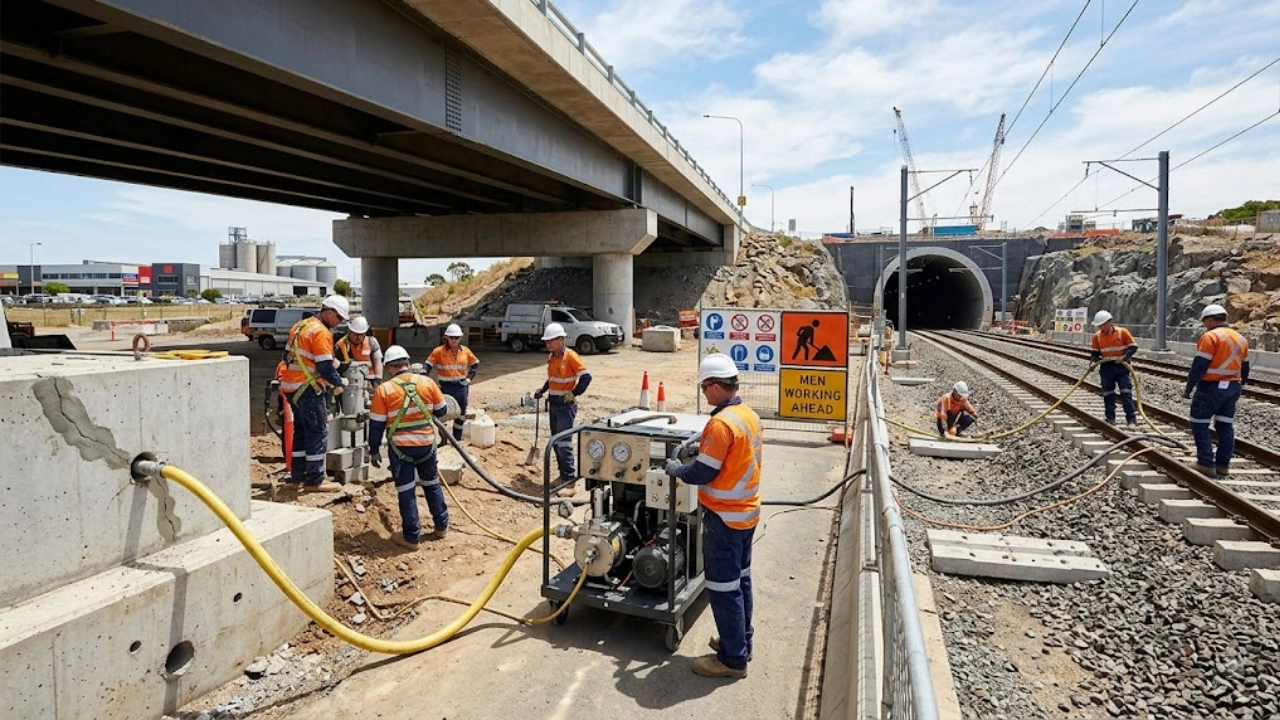
concrete grouting solution in Sydney

Infrastructure is the backbone of every growing city. Roads, bridges, tunnels, rail corridors, ports, industrial facilities, water treatment plants, and commercial developments all depend on strong and stable foundations to perform safely over many decades. While these structures often appear solid from the outside, their long term performance is heavily influenced by what lies beneath the surface.

One of the most important but often overlooked engineering processes is grouting. It plays a vital role in strengthening foundations, stabilising soil, filling voids, controlling water movement, and restoring structural performance. Without effective grouting, even well designed infrastructure can experience settlement, cracking, and premature deterioration.

As Australia’s infrastructure continues to expand and existing assets require ongoing maintenance, grouting has become an essential part of modern civil engineering practice.

Why Infrastructure Requires Long Term Ground Stability

Every structure transfers its load into the ground. If the supporting ground becomes unstable or develops hidden voids, the performance of the entire structure may be affected.

Natural ground conditions are rarely uniform. Changes in moisture, groundwater movement, soil composition, and previous construction activities can all influence the stability of the supporting foundation.

Civil engineers continually assess these conditions because even minor ground movement can create larger structural problems over time.

Maintaining stable support beneath concrete structures is one of the primary objectives of any successful infrastructure project.

What is Grouting?

Grouting is an engineered process where specialised materials are injected into soil, rock, or concrete to improve strength, reduce movement, or control water penetration.

Rather than replacing existing structures, grouting strengthens and improves the material already in place.

Depending on the project requirements, grout can be applied to:

  • Fill underground voids
  • Improve soil stability
  • Seal water pathways
  • Support existing foundations
  • Restore damaged concrete
  • Strengthen structural elements

Every project requires careful engineering assessment to determine the most appropriate grouting method.

Why Grouting Plays a Critical Role in Civil Engineering

Modern infrastructure projects often face challenging site conditions.

Construction may occur over variable soils, reclaimed land, ageing infrastructure, or locations affected by groundwater movement.

Grouting allows engineers to improve these conditions without major excavation or demolition.

This makes it a practical solution for projects where maintaining existing infrastructure is both economically and environmentally beneficial.

Common Infrastructure Applications

Grouting is used across many sectors of Australia’s construction industry.

Some of the most common applications include:

Infrastructure Asset

Purpose of Grouting

Bridges

Foundation stabilisation

Tunnels

Water control and void filling

Rail infrastructure

Ground improvement

Ports and marine structures

Soil stabilisation

Industrial facilities

Foundation support

Retaining walls

Structural reinforcement

Each application addresses a different engineering challenge, but the objective remains the same by improving long term structural performance.

Managing Ground Movement Before It Becomes a Structural Problem

Ground movement is rarely dramatic at the beginning.

Small changes beneath a structure can gradually lead to:

  • Concrete cracking
  • Uneven settlement
  • Misaligned structural elements
  • Reduced bearing capacity
  • Increased maintenance requirements

Early intervention often prevents these issues from developing into large scale remediation projects.

Grouting provides engineers with an effective method for stabilising affected areas before more serious structural damage occurs.

Supporting Existing Infrastructure Instead of Rebuilding

Australia’s infrastructure network continues to age.

Many bridges, transport facilities, industrial buildings, and commercial developments remain structurally valuable despite localised deterioration beneath foundations.

Rather than replacing these assets entirely, engineers increasingly focus on extending their service life through targeted rehabilitation.

Grouting plays a significant role in this approach by improving ground conditions while allowing existing structures to remain operational.

This strategy often delivers substantial savings compared with demolition and reconstruction.

Water Movement is a Major Engineering Challenge

One of the biggest threats to infrastructure is uncontrolled water movement.

Groundwater can gradually wash away fine soil particles, create underground voids, weaken foundations, and increase settlement risks.

Water may also enter concrete structures through joints and cracks, leading to long term deterioration.

Properly designed grouting systems help reduce these risks by sealing pathways that allow water to migrate beneath or through critical structural elements.

PRO TIP

Visible cracking is not always caused by problems within the concrete itself. In many cases, movement beneath the structure is the underlying cause. Addressing foundation conditions early can prevent repeated repair work in the future.

Supporting Sustainable Infrastructure

Modern engineering places increasing emphasis on sustainability.

Replacing major infrastructure requires significant quantities of concrete, steel, transport, labour, and energy.

Rehabilitation techniques such as grouting allow engineers to preserve existing assets while reducing construction waste and minimising environmental impact.

Extending the operational life of infrastructure also delivers long term economic benefits for both public and private asset owners.

Why Professional Investigation Comes First

No two sites behave in exactly the same way.

Before recommending any concrete grouting solution in Sydney, engineers investigate several important factors.

These may include:

  • Soil conditions
  • Groundwater behaviour
  • Structural movement
  • Existing damage
  • Load distribution
  • Foundation performance

Reliable investigation data allows engineers to design solutions based on actual site conditions rather than assumptions.

This improves both project performance and long term durability.

The Australian Construction Industry is Moving Towards Preventative Maintenance

Across Australia, asset owners are placing greater emphasis on preventative maintenance rather than waiting for major structural failures.

Industry research has shown that proactive maintenance programs significantly reduce lifecycle costs while improving the reliability of infrastructure assets.

Grouting supports this strategy because it allows developing issues to be addressed before they require extensive structural repairs.

For infrastructure managers, this approach provides better value over the life of the asset.

Why Experience Matters in Grouting Projects

Grouting is far more than simply filling empty spaces.

Successful outcomes depend on accurate engineering assessments, material selection, pressure control, injection sequencing, and continuous monitoring throughout the process.

Incorrect application can create additional stresses or fail to resolve the underlying issue.

This is why every grouting project should be planned and supervised by experienced professionals with a clear understanding of structural behaviour and ground engineering.

THINGS TO REMEMBER

Strong infrastructure begins with stable foundations.

Ground movement often develops slowly before visible damage appears.

Water infiltration can accelerate structural deterioration.

Grouting supports rehabilitation without major demolition.

Professional investigations provide the foundation for effective engineering solutions.

Preventative maintenance is generally more economical than large scale structural repairs.

Investing in Stronger Infrastructure for Future Generations

Australia’s infrastructure is expected to support growing communities for decades to come. Achieving this goal requires more than quality construction during the initial build. It also requires intelligent maintenance strategies that preserve structural performance as conditions change over time.

Grouting has become one of the most valuable techniques available to civil engineers because it strengthens existing assets, improves ground conditions, and reduces the need for costly reconstruction. When combined with accurate investigations and sound engineering principles, it plays an important role in protecting the long term value of critical infrastructure.

Strong Infrastructure Starts Beneath the Surface

The strength of any structure depends on the stability beneath it. If hidden voids, ground movement, or water related issues are left untreated, even the most impressive infrastructure can face unnecessary risks.

At Concrete Engineering Solutions, we believe successful engineering begins with accurate investigation and practical solutions tailored to each project. Our team works with developers, contractors, government agencies, industrial operators, and commercial property owners to deliver reliable remediation strategies that improve long term structural performance.

If your project involves ageing infrastructure, foundation movement, or structural rehabilitation, speak with Concrete Engineering Solutions today. The right engineering decision made early can protect your asset, reduce future costs, and deliver lasting confidence for years to come.
The Role of GPR During Large Scale Commercial Redevelopment Projects

Category: carbon fibre strengthening

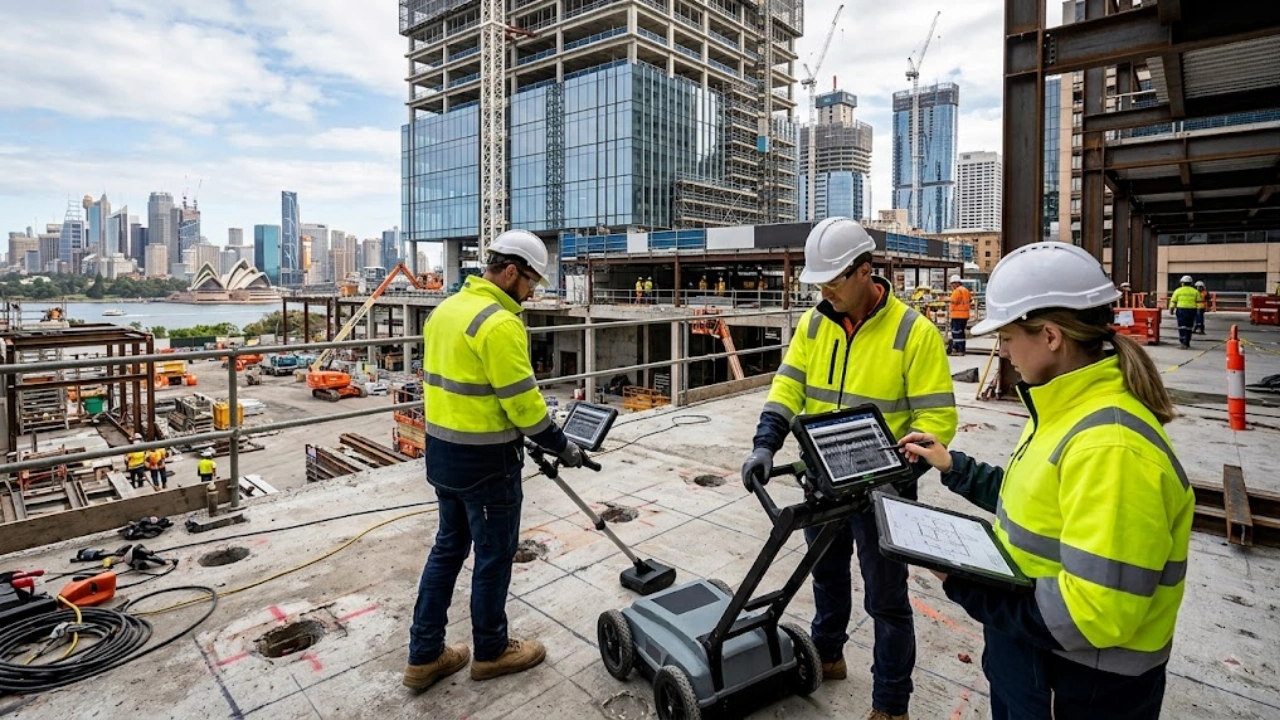
GPR Scanning in Sydney

Commercial redevelopment is reshaping Sydney at an unprecedented pace. Older office towers are being transformed into premium workplaces, shopping centres are being modernised, industrial sites are becoming mixed use developments, and ageing commercial buildings are being upgraded to meet modern performance standards. These projects involve far more than new architectural finishes. Every redevelopment begins with a detailed assessment of the existing structure to minimise risk before construction starts.

One of the most valuable technologies supporting this process is Ground Penetrating Radar, commonly known as GPR. Rather than relying on assumptions or outdated construction drawings, engineers can accurately identify what is hidden inside concrete before drilling, cutting, or structural modifications begin. This improves project planning, protects critical building components, and helps avoid expensive delays.

As redevelopment projects become larger and more technically demanding, GPR has become an essential part of structural investigations across Sydney.

Why Commercial Redevelopment Projects are More Complex Than Ever

Redeveloping an existing building is very different from constructing a new one. A new building starts with complete design control, while an existing structure comes with decades of modifications, repairs, tenant fit outs, and service upgrades that may never have been fully documented.

Many commercial buildings contain hidden reinforcement, post tension systems, electrical services, communication networks, fire protection systems, hydraulic pipes, and mechanical infrastructure. These concealed elements create uncertainty during construction because their exact locations cannot always be confirmed through drawings alone.

Every penetration made through concrete carries a level of structural and financial risk if these hidden components have not been accurately identified beforehand.

Why Traditional Building Documentation is No Longer Enough

Construction drawings are valuable reference documents, but they should never be treated as the only source of information during redevelopment.

Buildings evolve throughout their lifecycle. Tenants install new services, owners renovate internal spaces, equipment is upgraded, and structural alterations are completed to suit changing business requirements.

Over time, the building that exists today may differ significantly from the building originally documented decades ago.

Professional investigations provide real world information rather than assumptions, allowing engineers to make decisions based on actual site conditions.

How GPR Supports Better Decision Making

Ground Penetrating Radar is a non destructive investigation method that uses electromagnetic signals to detect concealed objects within concrete and below ground surfaces.

Instead of damaging the structure to locate hidden components, engineers receive detailed information before work begins.

This allows project teams to identify:

Hidden Element

Why It Matters

Reinforcing steel

Protect structural integrity

Post tension tendons

Prevent accidental damage

Electrical conduits

Improve workplace safety

Water pipes

Reduce service interruptions

Voids

Identify structural concerns

Concrete thickness

Support engineering assessments

The information collected becomes an important part of project planning and risk management.

Reducing Uncertainty Before Construction Starts

Large commercial redevelopment projects often involve hundreds of penetrations through concrete slabs and walls. Every core hole, anchor point, and service opening represents a potential risk if concealed structural elements are present.

Without accurate investigation, contractors may encounter unexpected obstacles during construction. These discoveries often lead to design revisions, additional engineering assessments, project delays, and increased costs.

By identifying hidden features before work begins, project teams can plan with confidence and minimise unnecessary disruption.

Supporting Safer Construction Practices

Safety remains one of the highest priorities on commercial construction sites.

Accidentally damaging electrical services or post tension tendons can create significant hazards for workers and building occupants. In busy commercial environments, even minor mistakes may result in extended shutdowns and operational disruption.

Using GPR Scanning in Sydney before structural modifications helps reduce these risks by providing reliable information about concealed building elements.

This proactive approach allows contractors to complete work with greater confidence while protecting both the structure and the people working within it.

Why Redevelopment Projects Demand Greater Accuracy

Commercial redevelopment often takes place in occupied buildings where businesses continue operating throughout construction.

Office workers, retailers, healthcare providers, and educational facilities frequently remain operational while refurbishment works are completed in stages.

This creates additional pressure on project teams to avoid mistakes that could interrupt essential building services.

Accurate investigations contribute to smoother construction programs by reducing unexpected discoveries during critical stages of the project.

PRO TIP

The most expensive mistake on a redevelopment project is often the one that could have been prevented. Investing in detailed investigations before construction begins is usually far more economical than repairing damaged structural elements or hidden building services.

Supporting Sustainable Building Practices

Redevelopment has become an important part of sustainable construction across Australia.

Rather than demolishing existing buildings, developers are increasingly extending the life of valuable assets through refurbishment and adaptive reuse.

This approach reduces construction waste, lowers material consumption, and helps preserve existing infrastructure.

Accurate structural investigations support this process by allowing existing buildings to be upgraded safely without unnecessary demolition or excessive reconstruction.

The Financial Value of Early Investigation

Every commercial redevelopment project operates within strict budgets and construction schedules.

Unexpected structural issues discovered midway through construction can affect both.

Industry experience consistently shows that early investigation contributes to:

  • Better construction planning
  • Reduced project delays
  • Lower remediation costs
  • Improved contractor productivity
  • Greater confidence for investors and stakeholders

Reliable information allows project teams to make informed decisions long before physical construction begins.

Where GPR Delivers the Greatest Value

Ground Penetrating Radar has become particularly valuable for projects involving:

  • Commercial office refurbishments
  • Shopping centre upgrades
  • Hospital redevelopments
  • University campus expansions
  • Hotel renovations
  • Government infrastructure projects
  • Industrial facility conversions

Each of these projects involves complex structural conditions where hidden building components must be accurately identified before modifications take place.

THINGS TO REMEMBER

Successful redevelopment begins with accurate structural information rather than assumptions.

Hidden services inside concrete can significantly affect construction planning.

Older buildings often contain undocumented modifications.

Early investigations reduce both project risk and financial uncertainty.

Protecting existing structural elements helps extend the lifespan of valuable commercial assets.

Building the Future Starts with Knowing What Already Exists

Commercial redevelopment is not simply about creating new spaces. It is about unlocking the full potential of existing buildings while protecting their structural integrity.

Ground Penetrating Radar has become an essential investigation tool because it allows project teams to see beyond the concrete surface. The information gathered supports safer construction, smarter planning, and more efficient redevelopment outcomes.

As Sydney continues to transform its commercial landscape, accurate structural investigations will remain one of the most valuable investments made before construction even begins.

Redevelopment Projects Deserve More Than Assumptions

Every successful redevelopment begins with confidence, and confidence comes from reliable information. Before the first core hole is drilled or the first concrete cut is made, give your project the advantage of accurate structural intelligence.

At Concrete Engineering Solutions, we work alongside developers, builders, engineers, project managers, and commercial property owners to provide detailed GPR investigations that remove uncertainty from complex construction projects. Our practical approach helps identify hidden risks early, allowing your team to move forward with clarity, efficiency, and peace of mind.

Talk to Concrete Engineering Solutions and make informed decisions before construction begins. A smarter investigation today can protect your budget, your timeline, and the long term success of your redevelopment project.

Structural Rehabilitation Strategies for Buildings Affected by Chloride Induced Reinforcement Corrosion

Category: carbon fibre strengthening

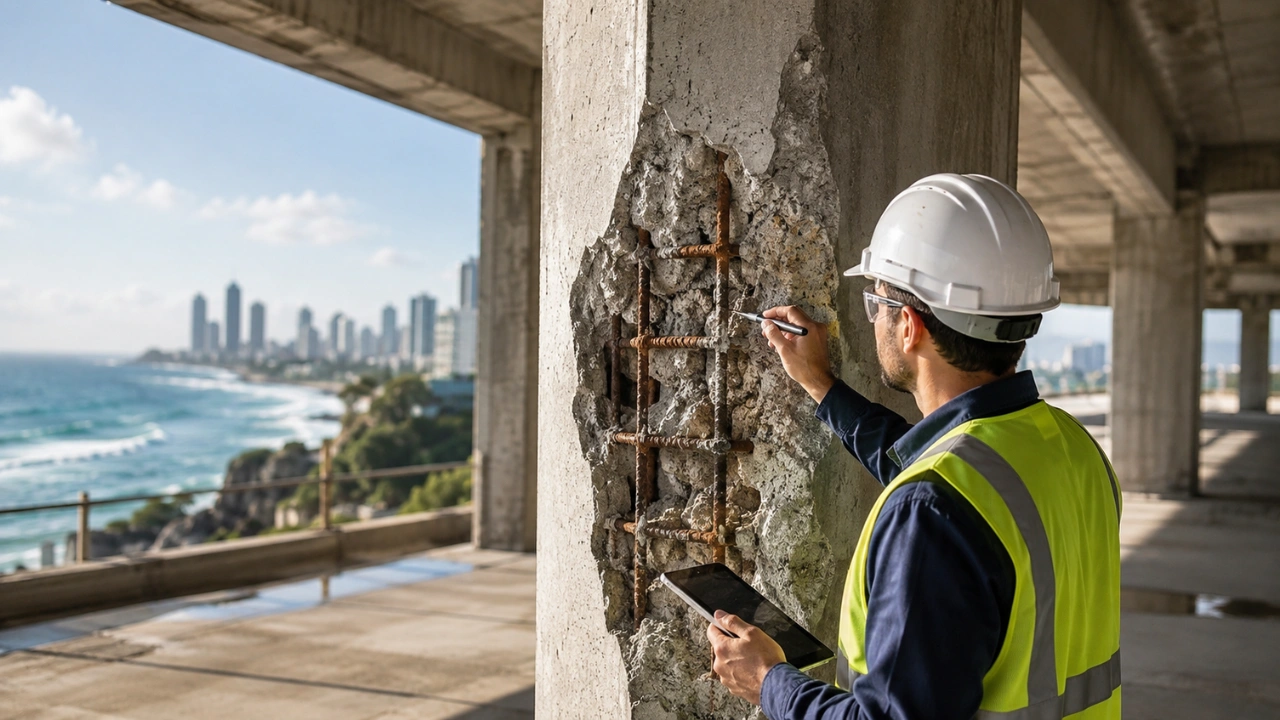
carbon fibre strengthening in Sydney

Concrete buildings are designed to provide decades of reliable performance, but their durability depends on the condition of the materials hidden beneath the surface. One of the most serious threats to reinforced concrete structures is chloride induced reinforcement corrosion. It develops gradually, often without obvious warning signs, and can significantly reduce the structural capacity of a building if left untreated.

This form of deterioration is particularly common in coastal regions across New South Wales, where reinforced concrete structures are constantly exposed to salt laden air, moisture, and changing environmental conditions. Residential apartment buildings, commercial complexes, car parks, bridges, and industrial facilities located near the coastline are especially vulnerable.

The good news is that modern structural rehabilitation techniques allow engineers to restore structural integrity while extending the service life of existing assets. With the right remediation strategy, many buildings can continue performing safely for many years without the need for complete reconstruction.

What is Chloride Induced Reinforcement Corrosion?

Steel reinforcement inside concrete is naturally protected by the highly alkaline environment created during the concrete curing process. This protective layer helps prevent corrosion even when the structure is exposed to normal weather conditions.

Problems begin when chloride ions penetrate through the concrete cover and reach the embedded reinforcement. Chlorides commonly originate from sea spray, coastal winds, contaminated groundwater, or de icing salts in colder climates. Once the protective layer surrounding the steel is broken down, corrosion begins.

As steel corrodes, it expands. This expansion creates internal pressure within the surrounding concrete, causing cracking, delamination, and eventually concrete spalling. The visible damage is often only a small indication of what is occurring beneath the surface.

Why Coastal Buildings Across Sydney Face Greater Risk

Sydney’s coastal environment creates ideal conditions for chloride contamination. Buildings located near the harbour, beaches, estuaries, and waterfront precincts are continuously exposed to airborne salt particles carried by wind.

These particles settle on external concrete surfaces and gradually migrate deeper into the structure through pores, micro cracks, and construction joints. Repeated wet and dry cycles accelerate this process by drawing chlorides further into the concrete.

Buildings constructed several decades ago often have thinner concrete cover over reinforcement than modern structures. This allows chlorides to reach the steel more quickly, increasing the likelihood of long term deterioration.

Recognising the Early Warning Signs

Corrosion rarely develops overnight. In many cases, deterioration progresses for years before major structural problems become visible.

Property owners and facility managers should pay attention to signs such as:

Visible Condition

Possible Structural Concern

Rust staining

Reinforcement corrosion

Concrete cracking

Expansion of corroding steel

Hollow sounding concrete

Delamination

Concrete spalling

Loss of concrete cover

Exposed reinforcement

Advanced deterioration

Persistent water ingress

Accelerated corrosion activity

Early identification provides engineers with more remediation options and often reduces repair costs significantly.

Why Cosmetic Repairs are Not Enough

Surface patching may improve the appearance of damaged concrete, but appearance alone does not restore structural performance.

When corrosion has already reached the reinforcement, simply replacing loose concrete without addressing the underlying cause can allow deterioration to continue beneath the repaired area.

Effective rehabilitation begins with identifying the source of the problem. Engineers evaluate moisture pathways, chloride contamination levels, reinforcement condition, and the remaining structural capacity before selecting the appropriate repair strategy.

Every building presents a different set of conditions, which is why rehabilitation plans should always be based on detailed engineering assessments rather than assumptions.

Modern Structural Rehabilitation Strategies

Advances in remediation technology now provide several effective options for repairing buildings affected by chloride induced corrosion.

The most suitable strategy depends on the level of deterioration, structural importance of the affected elements, and the future use of the building.

Concrete Removal and Reinforcement Treatment

Where corrosion is localised, damaged concrete may be carefully removed to expose the affected reinforcement.

The steel is cleaned, treated to reduce further corrosion, and the concrete section is reinstated using high performance repair materials.

This method is often used during the early stages of deterioration.

Protective Surface Treatments

Protective coatings and waterproofing systems help reduce future moisture and chloride penetration.

These systems are particularly valuable for balconies, podium decks, car parks, and external structural elements that experience ongoing exposure to rain and coastal conditions.

Cathodic Protection Systems

For critical infrastructure and heavily exposed structures, cathodic protection systems may be installed to significantly reduce ongoing corrosion activity.

Although more specialised, this approach has proven effective for long term asset preservation in aggressive marine environments.

Structural Strengthening

Where corrosion has reduced the structural capacity of reinforced concrete members, strengthening may be required in addition to repairs.

In many remediation projects, carbon fibre strengthening provides an efficient solution because it increases structural capacity without adding significant weight to the existing building.

Its lightweight properties, excellent tensile strength, and resistance to corrosion make it particularly suitable for rehabilitation projects involving ageing reinforced concrete.

Why Carbon Fibre Has Become a Preferred Solution

Traditional strengthening methods often involve steel plates or additional concrete sections. While these techniques remain suitable in some applications, they can increase structural weight and require more extensive construction work.

Modern carbon fibre systems offer several practical advantages.

  • Lightweight reinforcement
  • High tensile strength
  • Minimal increase in member size
  • Excellent durability
  • Reduced construction disruption
  • Long service life

These characteristics have made carbon fibre strengthening in Sydney increasingly popular for commercial buildings, apartment complexes, parking structures, and infrastructure assets requiring structural upgrades.

The Importance of Accurate Structural Investigations

Successful rehabilitation begins long before repair work starts.

Engineers typically undertake detailed investigations to determine:

  • Extent of chloride contamination
  • Depth of reinforcement corrosion
  • Concrete condition
  • Moisture pathways
  • Remaining structural capacity
  • Suitable remediation techniques

Without accurate data, repairs may address visible damage while leaving hidden deterioration untreated.

Professional investigations help ensure remediation budgets are invested where they provide the greatest long term benefit.

Australian Conditions Demand Long Term Thinking

Australia’s coastal climate places constant pressure on reinforced concrete structures.

High humidity, strong ultraviolet exposure, heavy rainfall events, and airborne salt all contribute to gradual deterioration.

Rather than waiting for severe structural damage to occur, many property owners are adopting planned asset management programs that include routine inspections, preventative maintenance, and targeted rehabilitation works.

Industry research consistently shows that early intervention can substantially reduce whole of life maintenance costs while extending the operational lifespan of concrete structures.

PRO TIP

Concrete cracks are not always the primary problem. In many cases they are simply visible evidence of corrosion occurring beneath the surface. Repair decisions should always be based on structural investigations rather than appearance alone.

Key Considerations Before Starting Rehabilitation

Every remediation project should address several important questions.

Engineering Consideration

Reason

What caused the corrosion?

Prevent recurrence

How far has deterioration progressed?

Determine repair scope

Is strengthening required?

Restore structural capacity

Is waterproofing adequate?

Reduce future moisture entry

Are long term maintenance plans in place?

Extend asset lifespan

Taking a strategic approach helps maximise the value of rehabilitation works while improving long term building performance.

Investing in the Future of Existing Buildings

Replacing an ageing concrete structure is often far more expensive than restoring it. Advances in structural rehabilitation now allow many buildings to continue operating safely long after deterioration first appears.

By combining accurate investigations, targeted concrete repairs, corrosion management, and appropriate strengthening systems, engineers can significantly improve structural performance while preserving valuable building assets.

For commercial property owners, strata managers, developers, and government asset managers, this approach delivers both economic and environmental benefits by extending the useful life of existing infrastructure rather than replacing it.

Restore Structural Integrity with Confidence

Buildings affected by chloride induced reinforcement corrosion require more than surface repairs. A properly engineered rehabilitation strategy protects structural safety, extends service life, and reduces future maintenance costs.

At Concrete Engineering Solutions, our experienced team provides structural investigations, condition assessments, remediation planning, and advanced strengthening solutions for residential, commercial, strata, and industrial properties across Sydney.

If your building is showing signs of concrete deterioration, reinforcement corrosion, or structural distress, contact Concrete Engineering Solutions for professional engineering advice and tailored rehabilitation solutions that protect your investment for the future.