
Concrete Engineering Solutions
Why Concrete Thickness Testing is Essential Before Installing Heavy Plant Equipment?
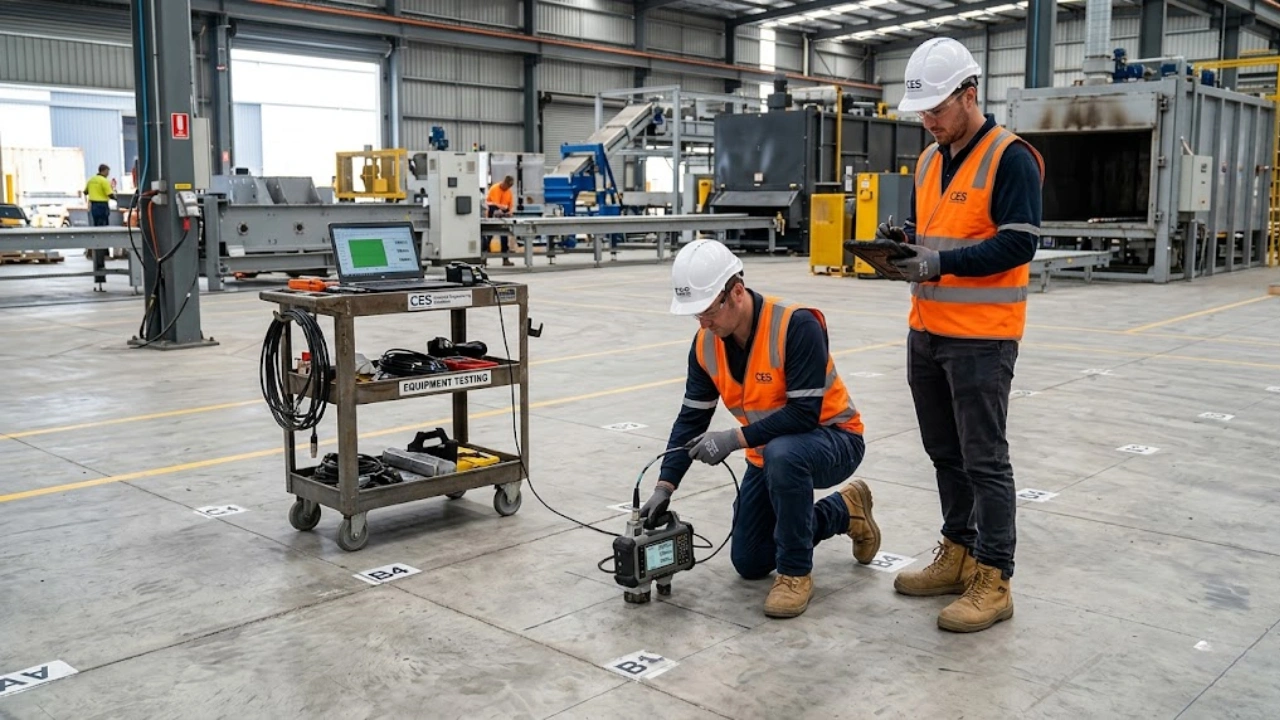
Installing heavy plant equipment is never as simple as positioning machinery on a concrete floor. Every piece of equipment introduces static and dynamic loads that must be safely transferred through the concrete slab and into the supporting structure below. If the slab is not capable of carrying those loads, the consequences can range from surface cracking to significant structural damage and costly operational downtime.
Across Sydney, manufacturing facilities, warehouses, distribution centres, food processing plants, hospitals, and commercial buildings are constantly upgrading equipment to improve productivity. Before these installations begin, one question should always be answered first. Is the existing concrete capable of supporting the proposed load?
This is where concrete thickness testing becomes an essential part of engineering due diligence. It provides reliable information that allows engineers to assess structural capacity before expensive equipment is installed.
Why Concrete Thickness Matters More Than Many People Realise
Concrete slabs are designed for specific loading conditions. The thickness of the slab is one of the key factors that determines how much weight it can safely support.
Two slabs may appear identical from the surface, yet their structural performance can be completely different because of variations in thickness, reinforcement, or construction methods.
Assuming that every concrete floor has sufficient capacity simply because it looks sound can become a costly mistake.
Accurate measurements provide engineers with the confidence to verify that the structure is suitable for its intended purpose.
Heavy Equipment Creates Different Types of Structural Loads
Not all machinery places the same demands on a building.
Some equipment applies constant vertical loads, while other machinery produces continuous vibration, rotational movement, or concentrated point loading.
Examples include:
- Manufacturing equipment
- Printing presses
- Industrial generators
- Medical imaging equipment
- Processing machinery
- Warehouse automation systems
Each installation requires engineers to evaluate how the concrete slab will perform throughout the equipment’s operational life.
Existing Buildings Often Present Unknown Conditions
Many industrial and commercial buildings across Sydney have been standing for several decades.
During that time they may have undergone:
- Multiple tenancy changes
- Internal refurbishments
- Structural modifications
- Equipment replacements
- Concrete repairs
Original construction drawings may no longer reflect actual site conditions. In some cases, documentation may not exist at all.
Physical verification becomes far more reliable than relying solely on historical records.
Why Accurate Data Improves Engineering Decisions
Structural engineers rely on factual information rather than assumptions.
Concrete thickness information supports decisions involving:
Engineering Assessment | Why It Is Important |
|---|---|
Load calculations | Verify structural capacity |
Equipment placement | Identify suitable installation areas |
Foundation design | Reduce structural risk |
Future upgrades | Improve long term planning |
Compliance reviews | Support engineering documentation |
Reliable measurements reduce uncertainty and allow more accurate engineering assessments.
Preventing Costly Installation Problems
Equipment installation projects involve significant investment.
Unexpected structural issues discovered after machinery has been delivered can affect project budgets, production schedules, and business operations.
Possible consequences include:
- Delayed commissioning
- Equipment relocation
- Structural strengthening
- Additional engineering assessments
- Concrete repairs
- Operational downtime
Identifying structural limitations before installation allows these issues to be addressed during the planning stage rather than after construction has commenced.
Why Surface Appearance Can Be Misleading
A clean concrete floor does not necessarily indicate a structurally adequate slab.
Internal conditions cannot be judged by visual inspection alone.
A slab may appear to be in excellent condition while containing:
- Variable thickness
- Historical repairs
- Hidden deterioration
- Construction inconsistencies
- Undocumented alterations
Professional testing provides objective information that cannot be obtained through visual inspections.
Supporting Business Continuity
Many equipment installations occur inside operating facilities where production schedules cannot be interrupted for extended periods.
Manufacturing plants, warehouses, distribution centres, and processing facilities often work to strict delivery deadlines.
Unexpected structural issues can create expensive delays that affect not only construction but also ongoing business operations.
Early investigation allows project teams to prepare suitable engineering solutions before equipment arrives on site.
PRO TIP
Installing machinery without confirming slab thickness can create unnecessary financial risk. The cost of testing is usually only a small fraction of the expense associated with structural remediation or relocating heavy equipment after installation.
Why Industrial Facilities Require Special Attention
Industrial buildings frequently experience changing operational requirements.
As production methods evolve, facilities often replace older machinery with larger and more efficient equipment.
Modern machinery may generate greater operational loads than the building was originally designed to accommodate.
This makes structural verification an important step whenever equipment upgrades are planned.
A Smarter Approach to Asset Management
Property owners are increasingly treating structural investigations as an investment rather than an additional project expense.
Reliable structural information provides long term value because it supports:
- Better capital planning
- Safer equipment installations
- Improved maintenance strategies
- Greater confidence during future upgrades
- More efficient facility management
Accurate building data becomes an important asset throughout the life of the property.
Australian Construction Standards Continue to Evolve
Engineering expectations continue to advance as buildings become more sophisticated and operational demands increase.
Modern projects place greater emphasis on risk management, documented investigations, and evidence based engineering decisions.
This shift reflects the growing recognition that accurate structural information improves both safety and project performance.
For industrial and commercial developments, concrete thickness testing in Sydney has become an important part of this process.
THINGS TO REMEMBER
Successful equipment installations begin long before machinery reaches the site.
Concrete slabs should never be assessed by appearance alone.
Historical drawings may not accurately represent current building conditions.
Early structural investigations reduce project uncertainty.
Reliable engineering information protects both assets and business operations.
Small investigations completed during planning often prevent major problems during construction.
Build Your Next Project on Facts, Not Assumptions
Heavy machinery represents a major investment, and every investment deserves a solid foundation. Before committing to installation, make sure the concrete beneath your equipment has been properly assessed by experienced professionals.
At Concrete Engineering Solutions, we help builders, engineers, facility managers, manufacturers, and commercial property owners make informed structural decisions through accurate testing and engineering investigations. Our team delivers practical advice backed by real site data, helping projects move forward with confidence instead of costly guesswork.
If a new equipment installation is part of your upcoming project, connect with Concrete Engineering Solutions before construction begins. A simple investigation today can help protect your investment for many years to come.