
Concrete Engineering Solutions
Why Concrete Scanning Has Become Critical for Managing Structural Risk in Sydney’s High Density Urban Developments?
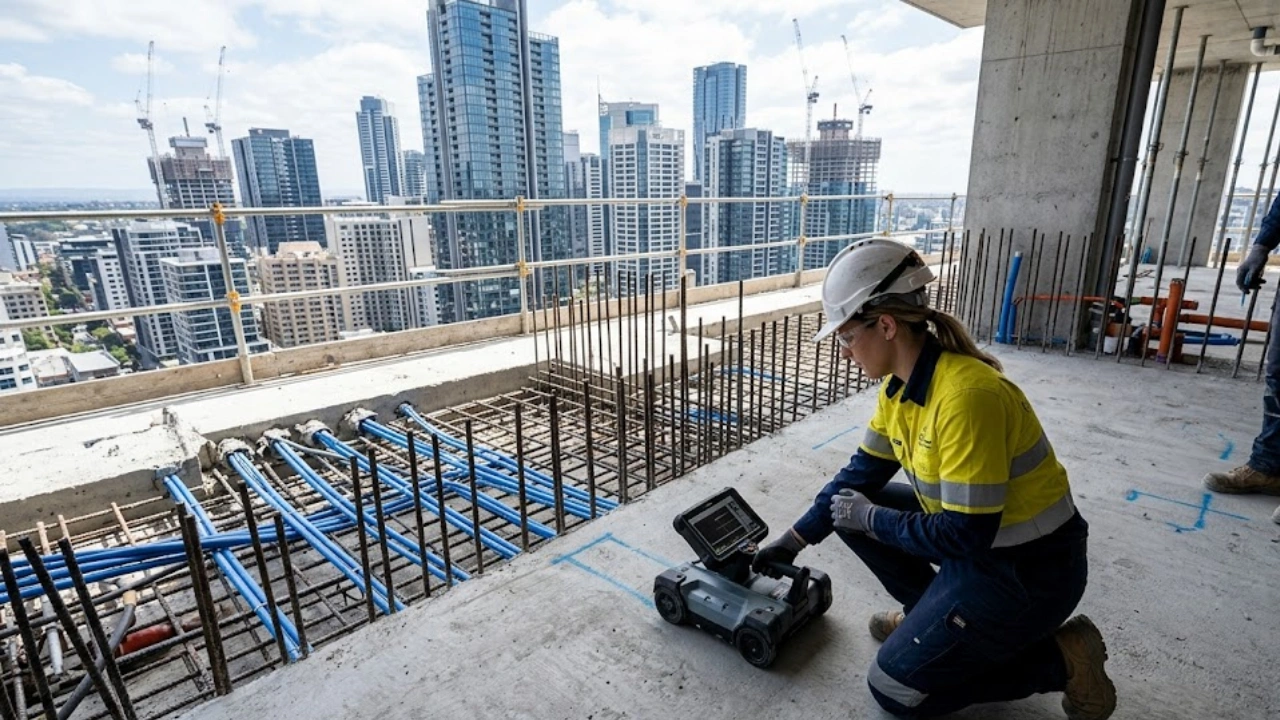
Sydney continues to experience significant urban growth. As available land becomes increasingly limited, developers are building upward rather than outward. High rise residential towers, mixed use developments, commercial precincts, hospitals, educational facilities, and transport infrastructure projects are transforming the city’s skyline.
While these developments create valuable space within densely populated areas, they also introduce complex structural challenges. Modern buildings contain extensive networks of reinforcement, post tension cables, electrical services, hydraulic systems, communication lines, and other concealed elements embedded within concrete.
Before any cutting, drilling, coring, demolition, or structural modification takes place, knowing what lies beneath the concrete surface is essential. This is why concrete scanning in Sydney has become one of the most important risk management tools in the construction and remediation industry.
Today, engineers, builders, project managers, and property owners rely on concrete scanning to reduce risk, improve safety, and protect critical structural components.
The Growing Complexity of Sydney’s Urban Buildings
Modern construction is far more complex than it was twenty or thirty years ago.
A typical high density building may contain:
- Reinforced concrete slabs
- Post tension systems
- Electrical conduits
- Hydraulic services
- Stormwater systems
- Fire protection infrastructure
- Communication cabling
- Structural beams and columns
Many of these components are hidden beneath the concrete surface and cannot be identified through visual inspection alone.
When modifications are required, blindly drilling or cutting into concrete can create serious consequences.
Why Structural Risk is Increasing in Urban Developments
As Sydney’s building stock ages, many structures undergo renovations, upgrades, fit outs, and redevelopment projects.
Common activities include:
- Office refurbishments
- Apartment renovations
- Retail fit outs
- Service upgrades
- Mechanical installations
- Lift upgrades
- Structural modifications
Each of these activities may require drilling, coring, or cutting through concrete elements.
Without accurate information about what exists within the concrete, the risk of damaging critical structural components increases significantly.
What is Concrete Scanning?
Concrete scanning is a non destructive investigation method used to identify embedded objects within concrete structures.
Advanced scanning equipment allows technicians to detect:
- Reinforcement bars
- Post tension tendons
- Electrical conduits
- Pipes
- Voids
- Structural elements
The process provides valuable information before construction work begins.
Instead of relying on assumptions or outdated drawings, project teams can make informed decisions based on actual site conditions.
Why Building Drawings are Not Always Reliable
Many property owners assume original construction drawings provide all the information required for modifications.
In reality, drawings may not always reflect actual site conditions.
Several factors contribute to this issue:
Construction Changes
Modifications may have been made during the original construction process.
Building Upgrades
Previous renovations may have introduced additional services or structural changes.
Missing Documentation
Older buildings often have incomplete records.
Inaccurate Records
Drawings may not always reflect what was ultimately built.
For these reasons, physical verification through scanning is often essential.
The Hidden Risks of Drilling Without Scanning
Drilling into concrete without prior investigation can create significant safety and financial risks.
Potential consequences include:
Risk | Possible Outcome |
|---|---|
Damaged reinforcement | Reduced structural performance |
Cut post tension tendons | Major structural concerns |
Damaged electrical services | Safety hazards and outages |
Broken water pipes | Flooding and repair costs |
Project delays | Increased construction expenses |
Compliance issues | Regulatory concerns |
These risks become even more significant within occupied buildings and high rise developments.
Why Post Tension Systems Require Special Attention
Many modern Sydney buildings contain post tensioned concrete slabs.
These systems use high strength steel tendons that are tensioned to improve structural performance.
Damaging a tendon can have serious consequences.
Potential issues may include:
- Structural weakening
- Costly repairs
- Project delays
- Safety risks
- Engineering investigations
Concrete scanning helps identify tendon locations before drilling or cutting begins, reducing the likelihood of accidental damage.
High Density Buildings Present Unique Challenges
Urban developments often have limited access and highly congested service networks.
In many buildings, multiple services may occupy the same section of a slab or wall.
Examples include:
- Electrical conduits
- Fire services
- Hydraulic pipes
- Data cabling
- Structural reinforcement
Without accurate scanning data, locating a safe drilling position becomes extremely difficult.
This is particularly important in hospitals, data centres, commercial towers, and residential apartment complexes where service interruptions can have widespread impacts.
The Role of Concrete Scanning in Risk Management
Effective risk management begins with accurate information.
Concrete scanning allows project teams to identify hazards before work commences.
Benefits include:
Improved Safety
Workers can avoid hidden hazards within concrete structures.
Reduced Structural Risk
Critical reinforcement and tendons can be protected.
Greater Project Certainty
Accurate data supports informed planning decisions.
Lower Repair Costs
Preventing damage is significantly cheaper than repairing it.
Reduced Delays
Unexpected discoveries during construction can be minimised.
For many projects, scanning has become a standard risk mitigation measure rather than an optional service.
Why Strata Managers are Increasingly Requesting Scanning Services
Strata buildings often undergo regular maintenance and refurbishment projects.
These may involve:
- Balcony upgrades
- Waterproofing works
- Service installations
- Façade repairs
- Apartment renovations
Strata committees and building managers are increasingly aware of the risks associated with hidden structural elements.
Concrete scanning helps ensure works proceed safely while protecting shared building assets.
Supporting Compliance and Due Diligence
Construction professionals have a responsibility to identify and manage risks before commencing work.
Failure to investigate concealed structural components can create liability issues if damage occurs.
Concrete scanning supports due diligence by providing documented evidence that appropriate investigations were completed prior to drilling, cutting, or coring activities.
This can be particularly important for:
- Commercial developments
- Government projects
- Healthcare facilities
- Educational institutions
- Major infrastructure projects
PRO TIP
The cost of scanning is often a fraction of the cost required to repair damaged post tension tendons, reinforcement, or building services. Investing in proper investigation before work begins can save significant time and money.
Common Situations Where Scanning Should Be Performed
Many construction activities benefit from prior scanning.
These include:
- Core drilling
- Service penetrations
- Structural modifications
- Concrete cutting
- Anchor installations
- Façade upgrades
- Mechanical service installations
- Lift upgrades
If drilling or cutting is involved, scanning should generally be considered before work proceeds.
Things to Remember
- Hidden structural elements cannot be identified through visual inspection alone.
- Building drawings may not accurately reflect existing conditions.
- Post tension tendons require careful protection.
- Service strikes can create costly delays.
- Concrete scanning reduces safety risks.
- Early investigation supports better project planning.
- Preventing damage is always more cost effective than repairing it.
Why Demand for Concrete Scanning Continues to Grow
Sydney’s development landscape is becoming increasingly complex. As buildings become larger, taller, and more service intensive, the need for accurate structural information continues to increase.
Project teams can no longer rely solely on assumptions or historical documentation when undertaking modifications.
Concrete scanning provides a practical and reliable way to identify concealed elements, reduce uncertainty, and support safer construction practices.
For high density urban developments, it has become one of the most valuable tools available for managing structural risk and protecting critical building assets.
Need Expert Concrete Investigation Services?
Whether you are planning a renovation, structural modification, service installation, or commercial upgrade, identifying hidden structural components before work begins is essential.
At Concrete Engineering Solutions, we provide professional concrete investigation services that help builders, engineers, strata managers, and property owners make informed decisions with confidence.
Contact Concrete Engineering Solutions to discuss your project and learn how expert Concrete Scanning in Sydney can help reduce risk, improve safety, and protect your investment.