
Concrete Engineering Solutions
What Can Go Wrong If You Skip Concrete Scanning Before Drilling?
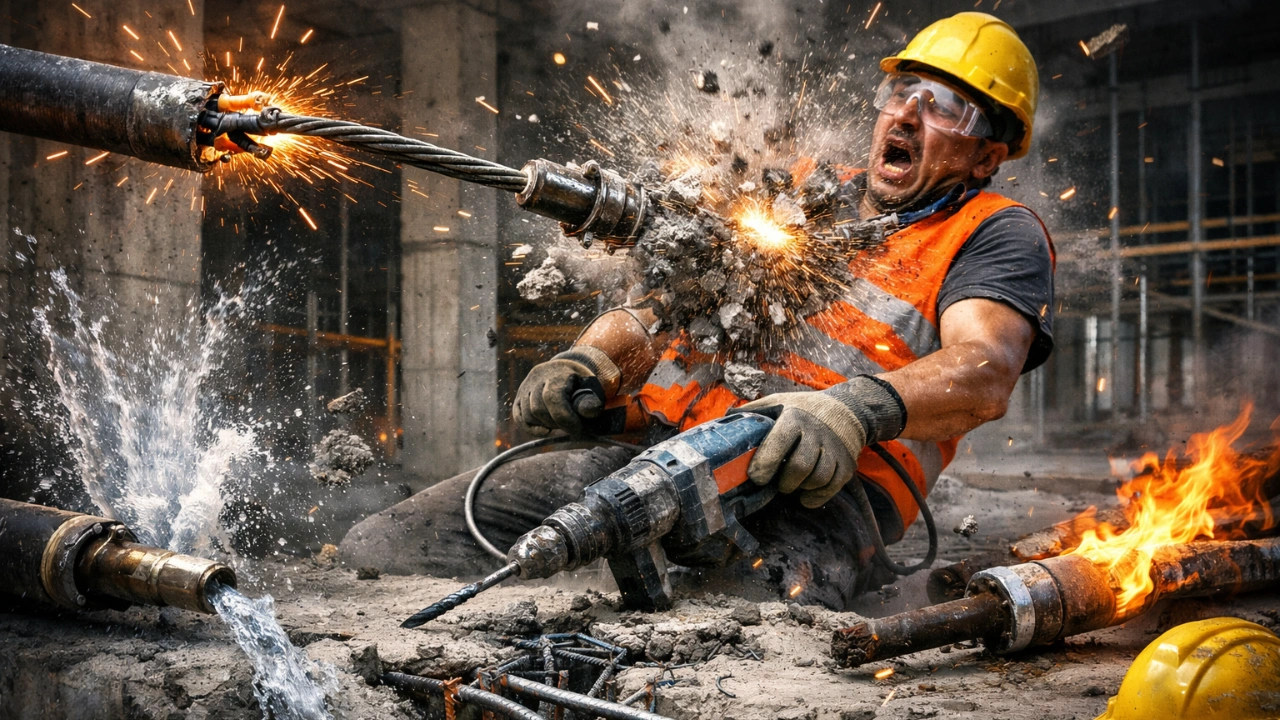
Concrete drilling is a routine activity across construction, remediation and asset maintenance projects in Sydney. Because it is common, it is often underestimated. Skipping concrete scanning before drilling remains one of the most frequent and preventable causes of safety incidents, structural damage and costly project delays across commercial and civil works.
In modern Australian construction, drilling into concrete without knowing what lies beneath is no longer a calculated risk; it is a failure in planning.
Why Concrete is Rarely “Empty”
Concrete slabs, walls and structural elements almost always contain embedded components that are not visible from the surface. These may include:
- Post-tension or pre-tension cables
- Reinforcing steel (reo)
- Electrical conduits and live services
- Water, gas or fire services
- Structural beams, thickenings or load zones
On older sites across Sydney, documentation is often incomplete, inaccurate or missing altogether. Even on new builds, last-minute service changes can differ from drawings. This is why relying solely on plans is not sufficient.
The Most Common Failures When Scanning Is Skipped
Post-Tension Cable Strikes
Post-tension cables are stressed under significant force. Striking a live tendon can cause:
- Sudden cable release
- Violent concrete spalling
- Serious injury to workers
- Permanent structural damage
In Sydney, post-tension systems are widely used in car parks, commercial floors and residential towers. A single strike can halt a project instantly and require extensive engineering assessment and remediation.
Damage to Live Electrical Services
Electrical conduits are often embedded within slabs and walls. Drilling without prior scanning can result in:
- Electrocution risk
- Fire hazards
- Shutdown of essential building services
- Emergency repairs and compliance breaches
From commercial offices to hospitals and data centres, service continuity is critical. Damage to live electrical infrastructure can have consequences well beyond the work zone.
Water, Gas and Fire Service Breaches
Water, gas and fire services are commonly installed within concrete elements. Accidental damage can lead to:
- Flooding and water damage
- Gas leaks and evacuation
- Fire system impairment
- Insurance and liability exposure
These incidents are particularly disruptive on operational sites, where downtime translates directly into financial loss.
Compromising Structural Reinforcement
Reinforcing steel is essential to the load-bearing performance of concrete. Drilling through reo without understanding spacing, depth and load paths can:
- Reduce structural capacity
- Create stress concentrations
- Lead to cracking or long-term deterioration
- Trigger the need for structural rectification
This is especially critical when installing anchors, fixings or penetrations in load-sensitive zones.
Injury, Equipment Damage and Site Shutdowns
Beyond structural consequences, unplanned strikes frequently result in:
- Damaged drill bits and coring equipment
- Lost productivity
- Site shutdowns for investigation
- SafeWork and compliance scrutiny
In Sydney’s regulated construction environment, even a minor incident can escalate quickly.
The Financial and Programme Impact
Skipping scanning may appear to save time at the outset, but the downstream costs are significant:
- Emergency repairs
- Specialist remediation works
- Engineering investigations
- Delays to critical path activities
- Contractual disputes and variations
In many cases, the cost of rectifying a single strike far exceeds the cost of professional scanning undertaken beforehand.
Compliance and Liability in the Australian Context
Australian Standards, WHS obligations and duty-of-care requirements place responsibility on contractors and project managers to identify and manage foreseeable risks.
Drilling blind into concrete where scanning is readily available may be considered a failure to implement reasonable risk controls. This can expose parties to:
- Regulatory action
- Insurance complications
- Legal liability
- Reputational damage
Across Sydney, scanning is increasingly viewed not as an optional precaution, but as a baseline compliance measure.
Why Professional Concrete Scanning Changes the Outcome
Engaging professional Concrete Scanning in Sydney before drilling provides clarity and certainty. Using non-destructive methods, scanning identifies embedded elements, enabling work to be planned safely and accurately.
Professional scanning allows teams to:
- Confirm safe drilling zones
- Adjust penetration locations before work begins
- Protect structural integrity
- Reduce safety risks
- Maintain programme certainty
This is particularly important on complex or high-risk sites, including multi-storey buildings, infrastructure assets and occupied facilities.
The Role of GPR in Modern Construction
GPR Scanning services in Sydney use Ground Penetrating Radar to detect objects within concrete by transmitting high-frequency radio waves and interpreting reflected signals.
When applied correctly, GPR can identify:
- Post-tension and pre-tension cables
- Reinforcement layout
- Conduits and services
- Slab thickness and cover
- Structural anomalies such as voids
The value of GPR lies not only in detection, but in accurate interpretation. Experienced technicians and engineers understand how to distinguish critical elements from background noise and construction artefacts.
Why “Guesswork” Is No Longer Acceptable
Historically, trades relied on experience, assumptions or limited drawings. In today’s environment, this approach is increasingly risky.
Sydney construction sites are:
- More complex
- More densely serviced
- More regulated
- Less tolerant of avoidable incidents
Scanning replaces uncertainty with verified information, allowing decisions to be made confidently and defensibly.
Answering Common Questions
Is concrete scanning really necessary before drilling?
Yes. Concrete almost always contains hidden services or reinforcement. Scanning identifies these risks before damage occurs.
Can drawings replace concrete scanning?
No. Drawings may be outdated or incomplete. Scanning confirms actual site conditions.
What happens if a post-tension cable is hit?
It can cause structural damage, safety incidents and require immediate engineering intervention.
Is scanning only needed on large projects?
No. Even small penetrations can cause major issues if services or reinforcement are struck.
The Bottom Line
Skipping concrete scanning before drilling is one of the most common and costly mistakes on Sydney construction sites. The risks extend beyond immediate damage to include safety incidents, structural compromise, compliance exposure and project delays.
Professional scanning is a practical, proven way to manage these risks. It supports safer work practices, better decision-making and long-term asset performance.
In a construction environment where accuracy, safety and accountability matter more than ever, drilling blind is no longer an acceptable option.