
Concrete Engineering Solutions
How Sydney’s Coastal Environment Accelerates Corrosion Risks in Damaged Post Tension Systems?
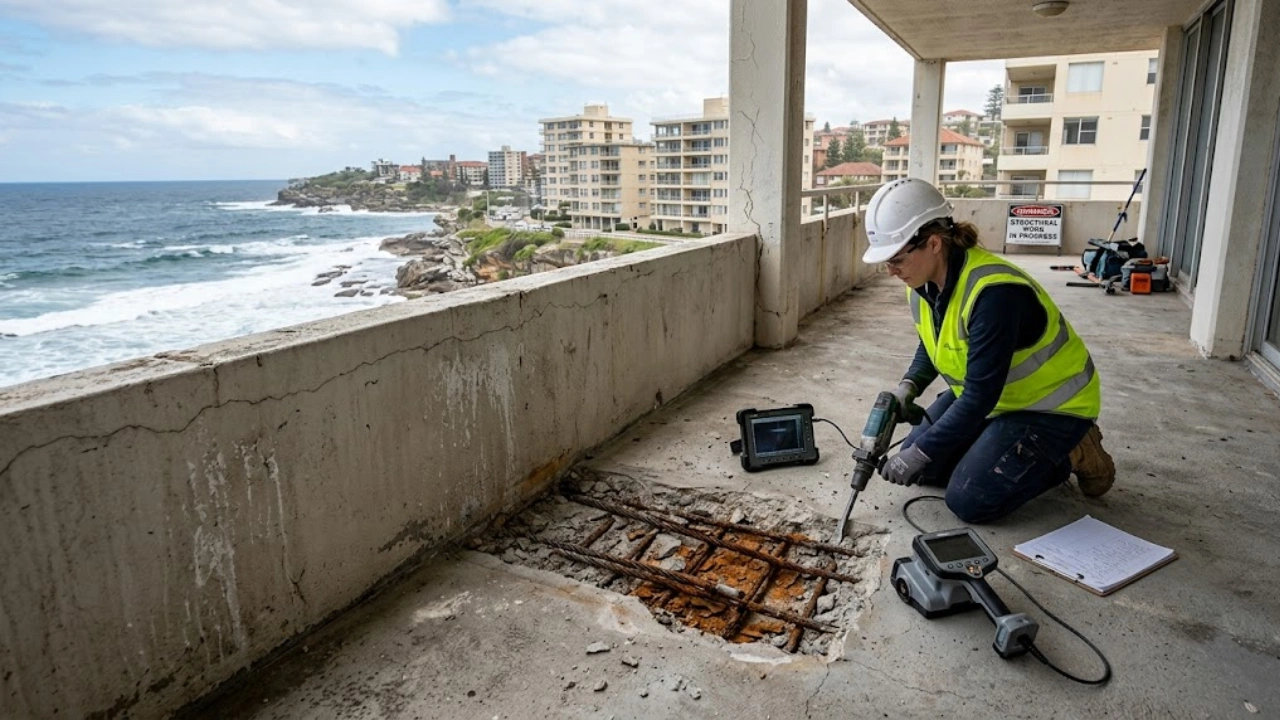
Sydney’s coastal lifestyle is one of the city’s greatest attractions. From waterfront apartments and luxury residential towers to commercial buildings overlooking the harbour, coastal properties continue to command strong demand.
However, while the ocean provides stunning views and lifestyle benefits, it also creates one of the harshest environments for concrete structures. Many building owners are unaware that the same sea air that attracts residents can quietly contribute to significant structural deterioration.
For buildings containing post tension systems, coastal exposure presents a particularly serious challenge. Once these systems become damaged or exposed to moisture, corrosion can develop rapidly and compromise structural performance if not addressed promptly.
The Hidden Threat Behind Modern Concrete Structures
Post tension systems play a critical role in many modern buildings across Sydney. They allow concrete slabs and beams to span greater distances while reducing the need for excessive structural supports.
These systems rely on high strength steel tendons that are placed within the concrete and tensioned to improve structural performance.
When fully protected, post tension tendons can perform effectively for many decades. Problems arise when moisture and contaminants gain access to the steel components.
At that point, the deterioration process can begin.
Why Coastal Locations Face Greater Structural Risks?
Not all buildings experience the same environmental conditions.
A property located near Sydney Harbour, Bondi, Manly, Coogee, Cronulla, or other coastal areas is exposed to environmental factors that are far more aggressive than those experienced inland.
The biggest concern comes from airborne chlorides.
Sea spray carries microscopic salt particles through the air every day. These particles settle on concrete surfaces and gradually penetrate the structure over time.
The combination of:
- Salt laden air
- High humidity
- Wind driven rain
- Temperature fluctuations
- Moisture retention
creates ideal conditions for corrosion to develop.
What Happens When Corrosion Begins?
Corrosion is often described as a silent structural threat because it develops out of sight.
Once chlorides reach the steel tendons, they break down the natural protective environment surrounding the steel.
As corrosion forms, the steel expands.
This expansion creates pressure within the surrounding concrete, leading to progressive damage.
Early Stages
At first, the damage may be difficult to detect.
Building owners might notice:
- Fine cracking
- Minor staining
- Localised moisture issues
Advanced Stages
As corrosion progresses, more serious problems can appear.
These may include:
- Concrete spalling
- Tendon deterioration
- Structural cracking
- Reduced load carrying capacity
- Costly remediation requirements
The longer the issue remains untreated, the greater the risk becomes.
Why Water Ingress Makes the Problem Worse
Water is often the catalyst that accelerates deterioration.
Many coastal buildings experience moisture penetration through:
|
Common Entry Point |
Potential Impact |
|---|---|
|
Balcony membranes |
Tendon exposure |
|
Rooftop waterproofing failures |
Moisture migration |
|
Cracked concrete |
Chloride penetration |
|
Expansion joints |
Water ingress |
|
Podium decks |
Long term deterioration |
When water enters the structure, it creates a pathway for chlorides to reach critical structural components.
This combination of moisture and salt contamination significantly increases corrosion activity.
The Cost of Ignoring Early Warning Signs
One of the biggest challenges with post tension deterioration is that visible damage often appears long after corrosion has already begun.
Property owners sometimes delay investigations because the symptoms appear minor.
Unfortunately, this can become a costly decision.
Industry reports consistently show that remedial repair costs increase substantially when deterioration progresses beyond the early stages.
What begins as a relatively localised repair can eventually involve:
- Structural investigations
- Concrete replacement
- Waterproofing upgrades
- Tendon repairs
- Long term monitoring programs
For strata buildings and commercial assets, these costs can quickly become significant.
Common Indicators That Require Attention
Building managers and property owners should monitor for warning signs that may indicate developing corrosion.
Some of the most common indicators include:
- Rust staining on concrete surfaces
- Water leaks through slabs
- Concrete cracking near structural elements
- Delaminated concrete
- Spalling around balconies and podium areas
- Dampness in car parks or basement spaces
While these signs do not automatically indicate tendon corrosion, they should always be investigated by qualified professionals.
PRO TIP
Rust stains are often one of the earliest visible signs of hidden reinforcement or tendon deterioration. Even small areas of staining can indicate larger issues developing within the concrete.
Why Coastal Apartment Buildings Are Particularly Vulnerable
Sydney’s coastal apartment sector has experienced substantial growth over recent decades.
Many of these buildings contain:
- Post tension slabs
- Transfer beams
- Podium structures
- Car park decks
- Balcony systems
These elements are regularly exposed to weather and moisture.
Balconies are particularly vulnerable because they experience direct rainfall, wind exposure, and ongoing movement from thermal expansion and contraction.
Without proper maintenance, deterioration can progress unnoticed beneath surface finishes.
The Importance of Regular Structural Assessments
Preventative maintenance remains one of the most effective ways to manage corrosion risks.
Regular inspections allow engineers to identify developing issues before major structural damage occurs.
A professional assessment may involve:
- Visual inspections
- Concrete condition assessments
- Moisture investigations
- Structural reviews
- Concrete scanning
- Corrosion evaluations
The information gathered helps determine the condition of the structure and identify appropriate remediation strategies.
When Building Modifications Increase Risk
Building upgrades and renovations often involve structural alterations.
In post tension buildings, these activities require careful planning and engineering oversight.
Activities involving post tension truncations works in Sydney should always be preceded by detailed investigations to locate tendon systems and assess structural implications.
Failure to properly assess these systems can increase both structural and safety risks.
Key Facts Property Owners Should Know
Fact 1
Corrosion can develop for years before visible damage appears.
Fact 2
Salt contamination remains active even after surfaces appear dry.
Fact 3
Waterproofing failures are often linked to structural deterioration.
Fact 4
Early intervention is significantly more cost effective than major remediation works.
Fact 5
Regular inspections can extend the lifespan of coastal structures.
A Smarter Approach to Asset Protection
Building owners today are becoming more proactive about protecting structural assets.
Rather than waiting for visible deterioration to become severe, many are investing in preventative inspections and maintenance programs.
This approach helps:
- Reduce long term repair costs
- Protect property values
- Improve structural reliability
- Extend building lifespan
- Minimise disruption to occupants
For coastal buildings, proactive asset management is often one of the most valuable investments an owner can make.
Protect Your Building Before Corrosion Takes Hold
Sydney’s marine environment presents unique challenges for concrete structures. While post tension systems offer excellent structural performance, they remain vulnerable when moisture and chlorides gain access to critical steel components.
Identifying problems early and addressing them promptly can help avoid costly repairs and preserve the long term integrity of the structure.
Need Expert Advice on Post Tension Structures?
At Concrete Engineering Solutions, we assist property owners, strata managers, builders, and commercial asset managers with structural assessments, concrete investigations, and remediation strategies tailored to Sydney’s challenging coastal environment.
If your building is showing signs of cracking, water ingress, concrete deterioration, or potential tendon related issues, contact Concrete Engineering Solutions to arrange a professional assessment and protect your asset for the future.