
Concrete Engineering Solutions
Not All Concrete Cracks are Cosmetic: When Injection is Structurally Required
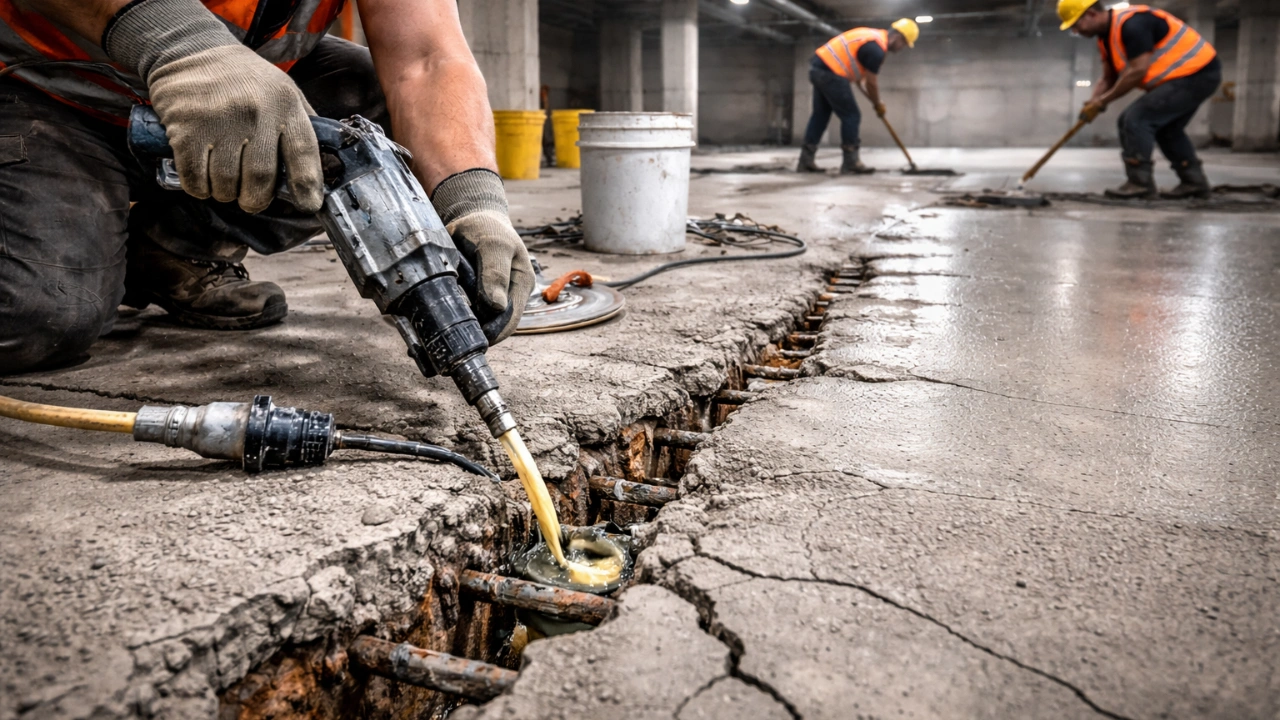
Concrete cracks are common across Sydney’s buildings and infrastructure. Walk through any car park, basement or industrial floor, and you will see them, some fine and superficial, others wider and more concerning. The challenge is that cracks that look harmless on the surface can sometimes indicate deeper structural issues.
Assuming all cracks are cosmetic is one of the most frequent and costly mistakes made during maintenance and remediation works. Understanding which cracks matter, when intervention is required, and why proper diagnosis comes first is essential for long-term performance and safety.
Understanding the Different Types of Concrete Cracks
Not all cracks behave the same way, and not all require the same response. Broadly, cracks fall into two categories: non-structural and structural.
Non-Structural Cracks
Non-structural cracks typically occur due to:
- Plastic shrinkage during curing
- Minor thermal movement
- Surface drying or finishing issues
These cracks are usually fine, shallow and stable. While they may affect appearance or surface durability, they do not significantly compromise load-bearing capacity.
Structural Cracks
Structural cracks are different. They often indicate:
- Overloading or changes in load paths
- Differential settlement or movement
- Loss of continuity in the concrete section
- Reinforcement stress or corrosion-related movement
These cracks may be wider, extend through the entire depth of the element, or exhibit ongoing movement. In these cases, the crack is a symptom, not the problem itself.
Why Visual Assessment Alone is Not Enough
A common misconception is that crack width alone determines severity. In reality, crack behaviour, location and cause are far more important.
For example:
- A narrow crack that runs through a load-bearing zone may be more serious than a wider surface crack in a non-critical area.
- A crack that continues to open over time suggests movement that must be addressed, not simply sealed.
This is why a structural engineering investigation is often required before deciding on a repair approach. Correct diagnosis ensures the repair restores performance rather than hiding symptoms.
When Crack Injection is Structurally Required
There are situations where crack injection is not optional; it is necessary to restore structural integrity.
Concrete crack injection is typically required when:
- Cracks compromise load transfer across an element
- Structural continuity has been lost
- Water ingress through cracks is accelerating deterioration
- Cracks are active or have resulted from structural movement
Injection restores continuity within the concrete, allowing the element to behave as designed under load. This is fundamentally different from surface sealing, which addresses only appearance or surface moisture.
The Risks of Ignoring Structural Cracks
Leaving structural cracks untreated or treating them incorrectly can lead to progressive deterioration. Common consequences include:
- Reduced load capacity, increasing the risk of further cracking or failure
- Accelerated reinforcement corrosion due to moisture ingress
- Propagation of cracking, making future repairs more complex
- Increased remediation costs as damage spreads
In Sydney’s coastal and urban environments, moisture exposure and chloride presence can significantly accelerate these issues once cracks are present.
Why Diagnosis Must Come Before Injection
Crack injection is not a “one-size-fits-all” solution. Injecting a crack without understanding its cause can result in:
- Re-cracking adjacent to the repair
- Locked-in stresses that cause new defects
- Failure of the injected repair under service loads
A proper investigation considers:
- Crack origin and load history
- Whether movement is ongoing or stabilised
- Structural role of the affected element
- Interaction with reinforcement and other defects
Only after these factors are understood can injection be specified with confidence.
Crack Injection and Broader Remedial Strategies
In many cases, crack injection forms part of a broader repair strategy rather than a standalone fix.
For example:
- Injection may restore structural continuity, followed by concrete resurfacing in Sydney to reinstate surface durability and wear resistance.
- Injection may be combined with load management measures or environmental protection to prevent recurrence.
Sequencing matters. Addressing the structure first ensures subsequent surface treatments perform as intended.
Sydney-Specific Considerations
Sydney’s building stock presents unique challenges that influence crack behaviour and repair decisions:
- Widespread use of post-tensioned slabs
- Mixed-age construction with variable detailing
- High exposure to moisture in basements and coastal zones
- Ongoing changes in building use and loading
These factors mean cracks must be assessed in context, not judged in isolation.
FAQs
Are all concrete cracks a problem?
No. Some are cosmetic, but others indicate structural issues that require engineering assessment.
Can cracks be ignored if there is no movement?
Not always. Even dormant cracks can allow moisture ingress and lead to long-term deterioration.
Is crack injection a permanent solution?
When correctly diagnosed and applied, injection can restore structural performance and provide long-term results.
Can surface repairs replace injection?
Surface repairs do not restore structural continuity and should not replace injection where structural cracks are present.
Making the Right Call
The key takeaway is simple: not all cracks are cosmetic, and not all cracks should be treated the same way.
Correct decision-making relies on:
- Understanding crack behaviour
- Identifying structural implications
- Selecting repair methods based on cause, not appearance
Injection is a powerful and effective tool, but only when used for the right reasons and in the right context.
Conclusion
Concrete cracks are easy to underestimate. They are also easy to mis-treat. Across Sydney’s commercial and industrial assets, long-term performance depends on recognising when a crack is more than a surface issue.
Structural crack injection, supported by proper investigation and sequencing, restores integrity rather than disguising damage. In a built environment where safety, durability and accountability matter, that distinction is critical.