
Concrete Engineering Solutions
Structural Rehabilitation Strategies for Buildings Affected by Chloride Induced Reinforcement Corrosion
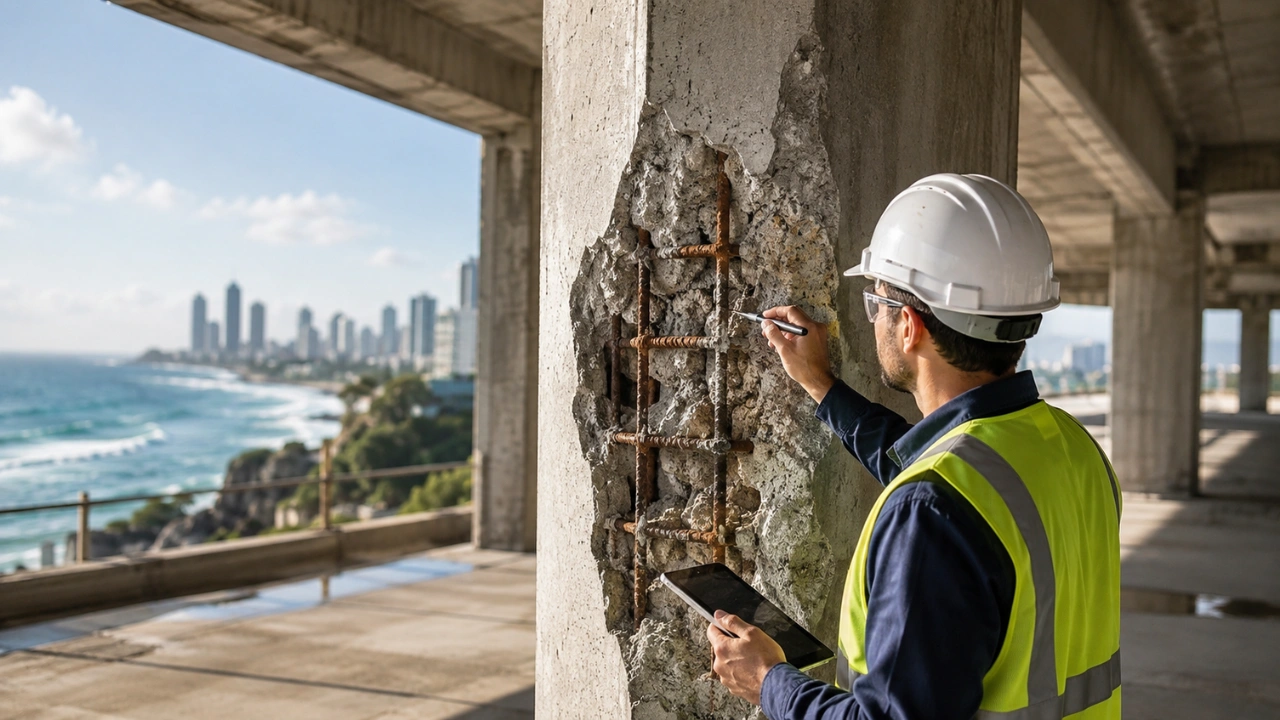
Concrete buildings are designed to provide decades of reliable performance, but their durability depends on the condition of the materials hidden beneath the surface. One of the most serious threats to reinforced concrete structures is chloride induced reinforcement corrosion. It develops gradually, often without obvious warning signs, and can significantly reduce the structural capacity of a building if left untreated.
This form of deterioration is particularly common in coastal regions across New South Wales, where reinforced concrete structures are constantly exposed to salt laden air, moisture, and changing environmental conditions. Residential apartment buildings, commercial complexes, car parks, bridges, and industrial facilities located near the coastline are especially vulnerable.
The good news is that modern structural rehabilitation techniques allow engineers to restore structural integrity while extending the service life of existing assets. With the right remediation strategy, many buildings can continue performing safely for many years without the need for complete reconstruction.
What is Chloride Induced Reinforcement Corrosion?
Steel reinforcement inside concrete is naturally protected by the highly alkaline environment created during the concrete curing process. This protective layer helps prevent corrosion even when the structure is exposed to normal weather conditions.
Problems begin when chloride ions penetrate through the concrete cover and reach the embedded reinforcement. Chlorides commonly originate from sea spray, coastal winds, contaminated groundwater, or de icing salts in colder climates. Once the protective layer surrounding the steel is broken down, corrosion begins.
As steel corrodes, it expands. This expansion creates internal pressure within the surrounding concrete, causing cracking, delamination, and eventually concrete spalling. The visible damage is often only a small indication of what is occurring beneath the surface.
Why Coastal Buildings Across Sydney Face Greater Risk
Sydney’s coastal environment creates ideal conditions for chloride contamination. Buildings located near the harbour, beaches, estuaries, and waterfront precincts are continuously exposed to airborne salt particles carried by wind.
These particles settle on external concrete surfaces and gradually migrate deeper into the structure through pores, micro cracks, and construction joints. Repeated wet and dry cycles accelerate this process by drawing chlorides further into the concrete.
Buildings constructed several decades ago often have thinner concrete cover over reinforcement than modern structures. This allows chlorides to reach the steel more quickly, increasing the likelihood of long term deterioration.
Recognising the Early Warning Signs
Corrosion rarely develops overnight. In many cases, deterioration progresses for years before major structural problems become visible.
Property owners and facility managers should pay attention to signs such as:
Visible Condition | Possible Structural Concern |
|---|---|
Rust staining | Reinforcement corrosion |
Concrete cracking | Expansion of corroding steel |
Hollow sounding concrete | Delamination |
Concrete spalling | Loss of concrete cover |
Exposed reinforcement | Advanced deterioration |
Persistent water ingress | Accelerated corrosion activity |
Early identification provides engineers with more remediation options and often reduces repair costs significantly.
Why Cosmetic Repairs are Not Enough
Surface patching may improve the appearance of damaged concrete, but appearance alone does not restore structural performance.
When corrosion has already reached the reinforcement, simply replacing loose concrete without addressing the underlying cause can allow deterioration to continue beneath the repaired area.
Effective rehabilitation begins with identifying the source of the problem. Engineers evaluate moisture pathways, chloride contamination levels, reinforcement condition, and the remaining structural capacity before selecting the appropriate repair strategy.
Every building presents a different set of conditions, which is why rehabilitation plans should always be based on detailed engineering assessments rather than assumptions.
Modern Structural Rehabilitation Strategies
Advances in remediation technology now provide several effective options for repairing buildings affected by chloride induced corrosion.
The most suitable strategy depends on the level of deterioration, structural importance of the affected elements, and the future use of the building.
Concrete Removal and Reinforcement Treatment
Where corrosion is localised, damaged concrete may be carefully removed to expose the affected reinforcement.
The steel is cleaned, treated to reduce further corrosion, and the concrete section is reinstated using high performance repair materials.
This method is often used during the early stages of deterioration.
Protective Surface Treatments
Protective coatings and waterproofing systems help reduce future moisture and chloride penetration.
These systems are particularly valuable for balconies, podium decks, car parks, and external structural elements that experience ongoing exposure to rain and coastal conditions.
Cathodic Protection Systems
For critical infrastructure and heavily exposed structures, cathodic protection systems may be installed to significantly reduce ongoing corrosion activity.
Although more specialised, this approach has proven effective for long term asset preservation in aggressive marine environments.
Structural Strengthening
Where corrosion has reduced the structural capacity of reinforced concrete members, strengthening may be required in addition to repairs.
In many remediation projects, carbon fibre strengthening provides an efficient solution because it increases structural capacity without adding significant weight to the existing building.
Its lightweight properties, excellent tensile strength, and resistance to corrosion make it particularly suitable for rehabilitation projects involving ageing reinforced concrete.
Why Carbon Fibre Has Become a Preferred Solution
Traditional strengthening methods often involve steel plates or additional concrete sections. While these techniques remain suitable in some applications, they can increase structural weight and require more extensive construction work.
Modern carbon fibre systems offer several practical advantages.
- Lightweight reinforcement
- High tensile strength
- Minimal increase in member size
- Excellent durability
- Reduced construction disruption
- Long service life
These characteristics have made carbon fibre strengthening in Sydney increasingly popular for commercial buildings, apartment complexes, parking structures, and infrastructure assets requiring structural upgrades.
The Importance of Accurate Structural Investigations
Successful rehabilitation begins long before repair work starts.
Engineers typically undertake detailed investigations to determine:
- Extent of chloride contamination
- Depth of reinforcement corrosion
- Concrete condition
- Moisture pathways
- Remaining structural capacity
- Suitable remediation techniques
Without accurate data, repairs may address visible damage while leaving hidden deterioration untreated.
Professional investigations help ensure remediation budgets are invested where they provide the greatest long term benefit.
Australian Conditions Demand Long Term Thinking
Australia’s coastal climate places constant pressure on reinforced concrete structures.
High humidity, strong ultraviolet exposure, heavy rainfall events, and airborne salt all contribute to gradual deterioration.
Rather than waiting for severe structural damage to occur, many property owners are adopting planned asset management programs that include routine inspections, preventative maintenance, and targeted rehabilitation works.
Industry research consistently shows that early intervention can substantially reduce whole of life maintenance costs while extending the operational lifespan of concrete structures.
PRO TIP
Concrete cracks are not always the primary problem. In many cases they are simply visible evidence of corrosion occurring beneath the surface. Repair decisions should always be based on structural investigations rather than appearance alone.
Key Considerations Before Starting Rehabilitation
Every remediation project should address several important questions.
Engineering Consideration | Reason |
|---|---|
What caused the corrosion? | Prevent recurrence |
How far has deterioration progressed? | Determine repair scope |
Is strengthening required? | Restore structural capacity |
Is waterproofing adequate? | Reduce future moisture entry |
Are long term maintenance plans in place? | Extend asset lifespan |
Taking a strategic approach helps maximise the value of rehabilitation works while improving long term building performance.
Investing in the Future of Existing Buildings
Replacing an ageing concrete structure is often far more expensive than restoring it. Advances in structural rehabilitation now allow many buildings to continue operating safely long after deterioration first appears.
By combining accurate investigations, targeted concrete repairs, corrosion management, and appropriate strengthening systems, engineers can significantly improve structural performance while preserving valuable building assets.
For commercial property owners, strata managers, developers, and government asset managers, this approach delivers both economic and environmental benefits by extending the useful life of existing infrastructure rather than replacing it.
Restore Structural Integrity with Confidence
Buildings affected by chloride induced reinforcement corrosion require more than surface repairs. A properly engineered rehabilitation strategy protects structural safety, extends service life, and reduces future maintenance costs.
At Concrete Engineering Solutions, our experienced team provides structural investigations, condition assessments, remediation planning, and advanced strengthening solutions for residential, commercial, strata, and industrial properties across Sydney.
If your building is showing signs of concrete deterioration, reinforcement corrosion, or structural distress, contact Concrete Engineering Solutions for professional engineering advice and tailored rehabilitation solutions that protect your investment for the future.