
Concrete Engineering Solutions
5 Signs Your Building Requires a Structural Engineering Investigation
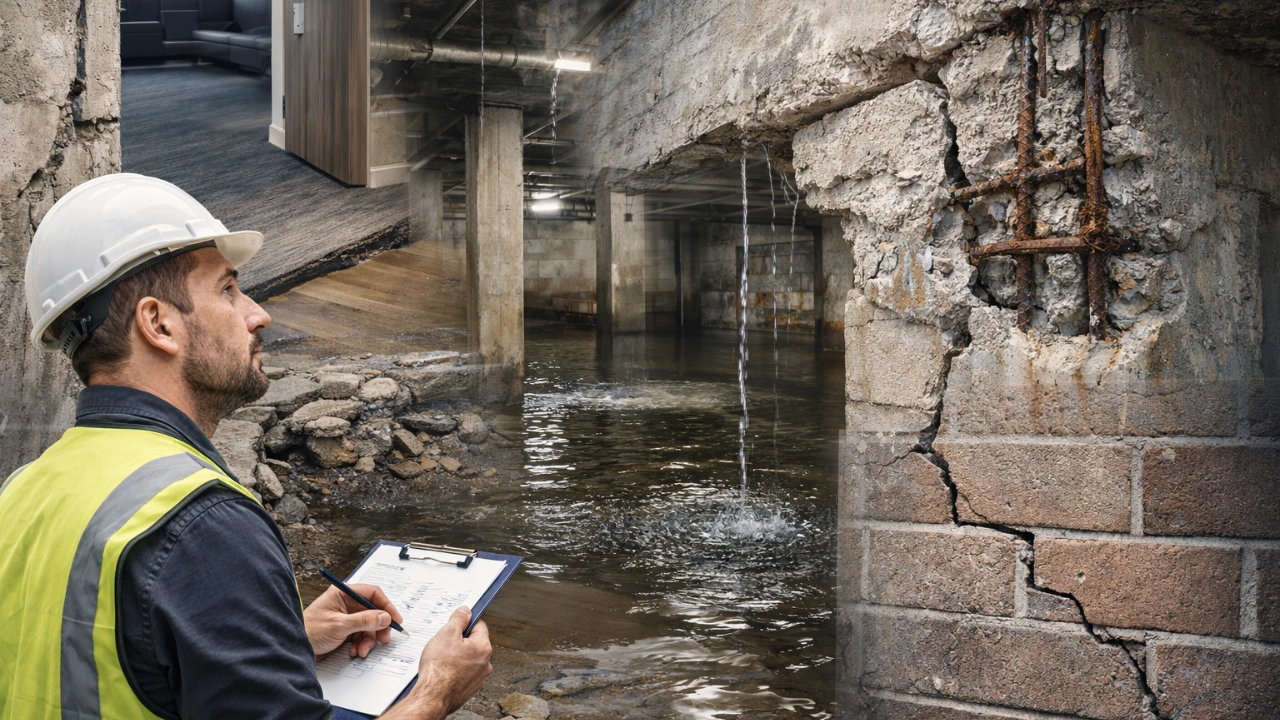
Structural problems rarely appear without warning. They evolve over time. What separates a controlled repair from a major rectification project is how early those warning signs are recognised and whether the response is based on proper engineering assessment.
A structural engineering investigation is not simply an inspection. It is a systematic evaluation of how a building performs relative to its intended structural capacity. It considers load paths, material condition, durability exposure, settlement behaviour and compliance with current standards.
In our experience across residential, commercial, industrial and strata buildings, the following conditions should never be ignored.
1.Cracking That Reflects Structural Movement
All concrete cracks. The critical question is why.
Shrinkage cracks typically stabilise shortly after construction. Structural cracks behave differently. They tend to follow load paths, radiate from stress points, or reappear after cosmetic repair.
When cracking progresses over time, it often indicates:
- Redistribution of load
- Foundation settlement
- Reinforcement corrosion
- Increased imposed loads
- Long-term material fatigue
Without proper evaluation, surface patching only conceals the symptom. A structural investigation determines whether the cracking affects structural continuity or remains superficial.
The distinction is fundamental before any remedial decision is made.
2.Differential Settlement or Slab Movement
Subtle changes in floor level are frequently dismissed. However, misaligned doors, repetitive tile cracking, or visible slab deflection can signal deeper performance issues.
Sydney’s varying soil profiles, including reactive clays and historical uncontrolled fill, can contribute to foundation movement over time. Combined with ageing reinforcement or altered load usage, this may lead to uneven settlement.
A proper building structural investigation in Sydney assesses:
- Foundation interaction with soil conditions
- Original design intent
- Structural capacity of slabs and beams
- Current load demands
This ensures remediation addresses the cause rather than simply correcting visible unevenness.
3.Persistent Moisture Affecting Structural Elements
Moisture ingress is one of the most common drivers of structural deterioration.
When water repeatedly penetrates basements, podium slabs, or retaining walls, corrosion of reinforcement is likely. Corrosion expansion fractures surrounding concrete can reduce the effective steel cross-section.
In coastal or high rainfall areas of Sydney, chloride exposure can accelerate this process.
What begins as minor rust staining can develop into spalling and capacity reduction if not properly assessed. Investigation allows quantification of deterioration depth before repair methodology is selected.
Treating moisture without assessing structural impact is incomplete remediation.
4.Recurring Repairs Without Lasting Resolution
When the same defect returns after multiple repairs, the underlying structural mechanism has not been resolved.
This is common in strata buildings where patch repairs are undertaken repeatedly without deeper analysis. Cosmetic improvements may temporarily restore appearance but do not correct load redistribution, corrosion progression or foundation instability.
A structured assessment reviews crack patterns, reinforcement condition and structural behaviour over time. It ensures that remedial works are proportionate, targeted and durable.
Engineering judgement prevents cyclical maintenance expenditure.
5.Spalling Concrete and Exposed Reinforcement
Once reinforcement is visible, the issue has progressed beyond minor deterioration.
Spalling indicates internal pressure, often from corrosion or bond failure. As steel loses cross-sectional area, its structural capacity may decrease. In severe cases, load transfer between concrete and reinforcement becomes compromised.
At this stage, immediate evaluation is necessary to determine:
- Extent of corrosion
- Remaining structural capacity
- Whether strengthening is required
- Appropriate staged remediation
Delaying intervention increases both risk and cost.
What a Proper Investigation Involves
A true structural assessment goes beyond visual review.
At Concrete Engineering Solutions, investigations may include non-invasive and invasive techniques, such as detailed visual mapping, material hardness testing, core sampling, pull-off testing, and subsurface scanning, where required.
Analysis considers both original design assumptions and current usage conditions. Advanced modelling software is used where necessary to evaluate structural performance against modern standards.
The goal is clarity – not assumption.
Understanding the root cause allows tailored repair strategies, whether that involves crack injection, strengthening, waterproofing upgrades, retrofitting or staged structural remediation.
Why Investigation Should Precede Repair
Skipping the investigation introduces risk.
Without proper diagnosis, repair may:
- Address symptoms but not causes
- Lock in stress conditions
- Underestimate capacity loss
- Result in repeat failure
- Increase long-term expenditure
Conversely, early engineering assessment enables efficient, proportionate and compliant solutions.
In a city with mixed-age building stock and diverse environmental exposure, informed decision-making is essential.
When Advice is Required
If cracking is widening, reinforcement is exposed, water intrusion persists, or structural movement is evident, professional evaluation should not be delayed.
Early understanding protects safety, compliance and long-term asset value.
Concrete Engineering Solutions provides comprehensive structural assessment services across Sydney, delivered by experienced in-house Regulated Design Practitioners.
If your building is showing signs of distress, arrange a professional review before minor defects escalate into significant structural failures.
Contact our team to schedule an initial consultation and obtain clear, engineering-led guidance tailored to your property.
Frequently Asked Questions
What is the difference between a structural inspection and a structural engineering investigation?
A visual inspection identifies visible defects. A structural engineering investigation goes further. It analyses the cause of those defects, evaluates load paths, assesses material condition and determines whether structural capacity has been affected. It may involve testing, modelling and review of original design documentation.
When should a building structural investigation be carried out?
An investigation should be undertaken when there is progressive cracking, visible reinforcement corrosion, slab movement, repeated repair failure, or persistent moisture affecting structural elements. It is also recommended before major renovations or load changes.
Can cracks alone justify an investigation?
Yes, depending on their behaviour and location. Cracks near load-bearing elements, cracks that widen over time, or cracks accompanied by movement or spalling should be assessed. Stable, hairline shrinkage cracks typically do not require structural evaluation.
Is an investigation required before remedial works begin?
In most cases, yes. Repairing without understanding the root cause can lead to recurring defects. An investigation ensures the repair methodology matches the structural condition and complies with relevant standards.
How long does a structural engineering investigation take?
The timeframe depends on the issue’s complexity and the building’s size. Some assessments can be completed within days, while complex cases involving testing and modelling may require additional time. A clear scope is usually established during the initial consultation.
Will an investigation always lead to major repair work?
Not necessarily. In many cases, investigations confirm that defects are minor or stable. The purpose is clarity, either to justify intervention or to provide confidence that monitoring is sufficient.
Do older Sydney buildings require more frequent structural assessments?
Older buildings often face durability challenges due to outdated detailing, thinner concrete cover or long-term environmental exposure. While not all require major intervention, periodic assessment is prudent, particularly where corrosion or settlement is evident.