
Concrete Engineering Solutions
Structural Issues That Regular Building Maintenance Should Never Ignore
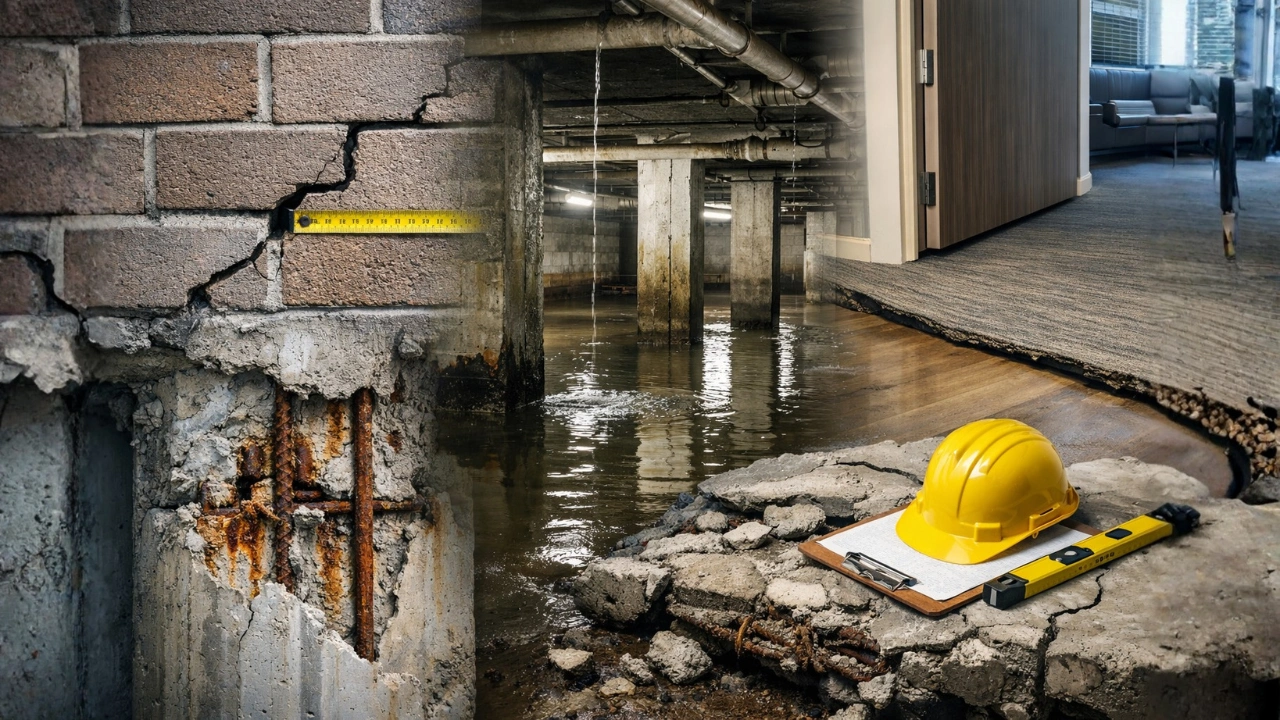
Most structural failures don’t happen overnight.
They begin quietly. A small crack. A damp patch. Rust stains near a column. A slab that feels slightly uneven.
During routine inspections, these signs are often dismissed as minor maintenance items. But some issues are early warnings of deeper structural stress.
The purpose of regular building maintenance is not just to keep a property looking presentable. It is to protect its structural integrity over time.
Ignoring the wrong defect can turn manageable repair work into major rectification.
1.Cracks That Change Over Time
Hairline cracks are common in concrete. Many are harmless.
What should never be ignored are cracks that:
- Continue to widen
- Reappear after repair
- Follow structural lines near beams or columns
- Form step patterns in masonry
Movement is the key factor. If a crack grows, something is shifting.
Regular maintenance inspections should include measuring and monitoring cracks, rather than simply noting their presence.
2.Rust Stains and Exposed Reinforcement
Rust staining is more than cosmetic.
When steel reinforcement corrodes, it expands. That expansion forces concrete to crack and break away. This process is progressive.
Once spalling begins, the damage accelerates.
Early detection during maintenance prevents:
- Loss of structural capacity
- Expensive large-scale repairs
- Safety risks from falling concrete
Moisture control and protective repairs are far easier at the early stage.
3.Water Ingress in Basements and Podiums
Water entering structural elements is a serious warning sign.
Basements in Sydney are especially vulnerable due to:
- Groundwater pressure
- Heavy rainfall
- Ageing waterproofing systems
Water reaching reinforcement speeds up corrosion dramatically.
Maintenance teams should treat persistent dampness, leaks, or efflorescence as structural risk indicators, not surface issues.
4.Uneven Floors or Subtle Deflection
Small level changes often go unnoticed at first.
But deflection in slabs or beams can indicate:
- Overloading
- Foundation settlement
- Loss of support
- Progressive material deterioration
Any noticeable change in floor levels, especially in commercial or industrial settings, should be assessed structurally.
Maintenance records are valuable here. Comparing past and present conditions can reveal trends in movement.
5.Repeated “Patch Repairs” in the Same Area
If the same location needs repair every year, the root cause has not been addressed.
Repeated cosmetic repairs without investigation usually mean:
- Ongoing moisture exposure
- Structural movement
- Corrosion not properly treated
Short-term fixes hide symptoms. They rarely solve them.
Why Maintenance Is More Than Surface Upkeep
Effective building maintenance work in Sydney should always include a structural awareness component.
Maintenance is not just cleaning, painting or patching. It is an opportunity to:
- Identify early structural deterioration
- Monitor known defects
- Prevent escalation
- Plan staged repairs
In a city like Sydney, where buildings are exposed to coastal conditions, heavy rainfall, and ageing infrastructure, proactive monitoring is critical.
Early detection reduces risk. It also protects asset value.
PRO Tip: Document Everything
One of the simplest but most powerful tools in structural maintenance is documentation.
Photograph cracks. Record measurements. Date inspections.
Trends matter more than single observations.
If something changes, that change tells a story.
When to Escalate Beyond Maintenance
Maintenance teams should escalate to structural assessment when:
- Cracks widen over time
- Reinforcement becomes visible
- Concrete begins breaking away
- Movement affects doors, windows or structural joints
- Water ingress persists despite surface repair
Early structural advice is far less disruptive than late-stage emergency repairs.
Conclusion
Structural issues rarely announce themselves loudly.
They begin as small changes that are easy to ignore during routine maintenance.
The difference between controlled repair and major rectification often comes down to how early those signs were recognised.
Regular maintenance should not only maintain appearance; it should protect structural performance.
Ignoring the wrong defect can cost far more than fixing it early.
Frequently Asked Questions
Are small cracks always safe?
Not always. Stable hairline cracks are common, but cracks that change over time should be monitored.
How often should structural elements be inspected?
Commercial and strata properties should include structural review as part of routine maintenance, especially in high-exposure environments.
Is rust staining serious?
Yes. Rust indicates reinforcement corrosion, which can reduce structural capacity if untreated.
Can water ingress affect structural strength?
Absolutely. Persistent moisture accelerates steel corrosion and weakens concrete over time.
When should a structural engineer be consulted?
If movement, widening cracks, or reinforcement exposure is observed, professional assessment is recommended.